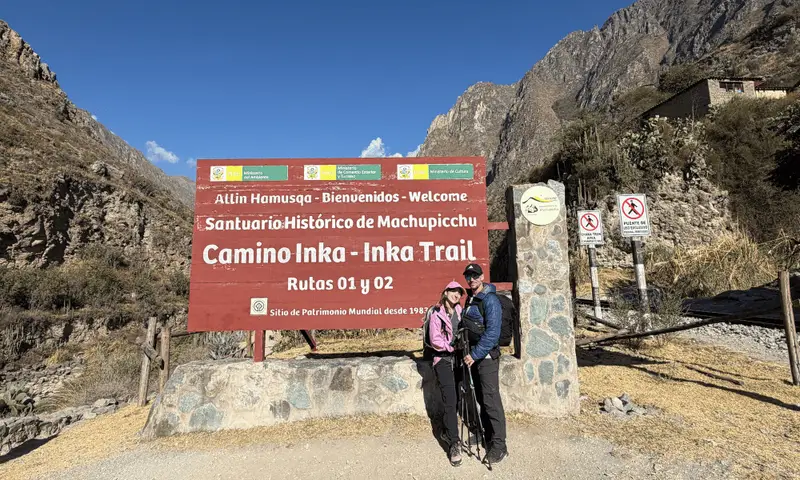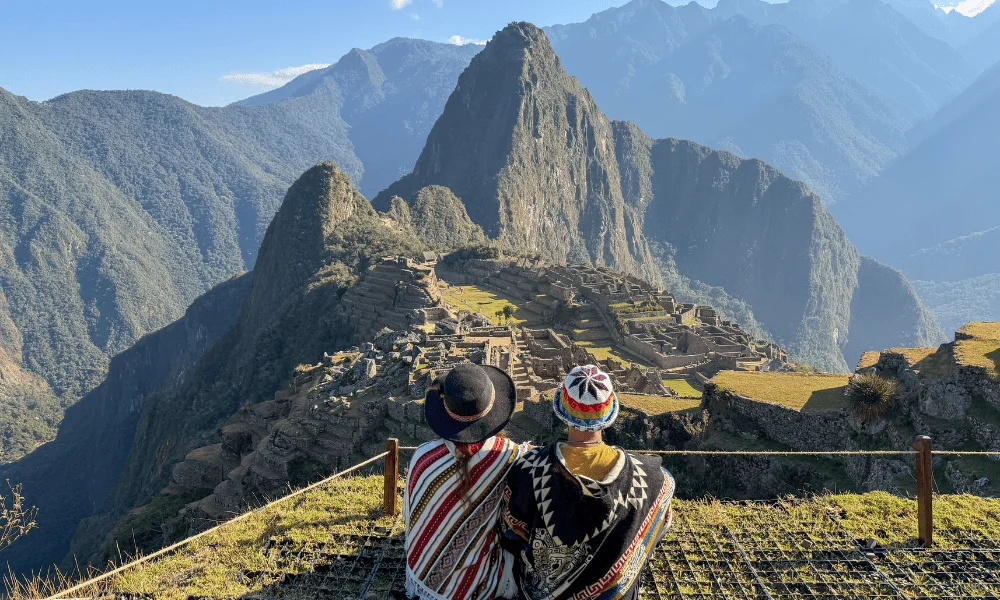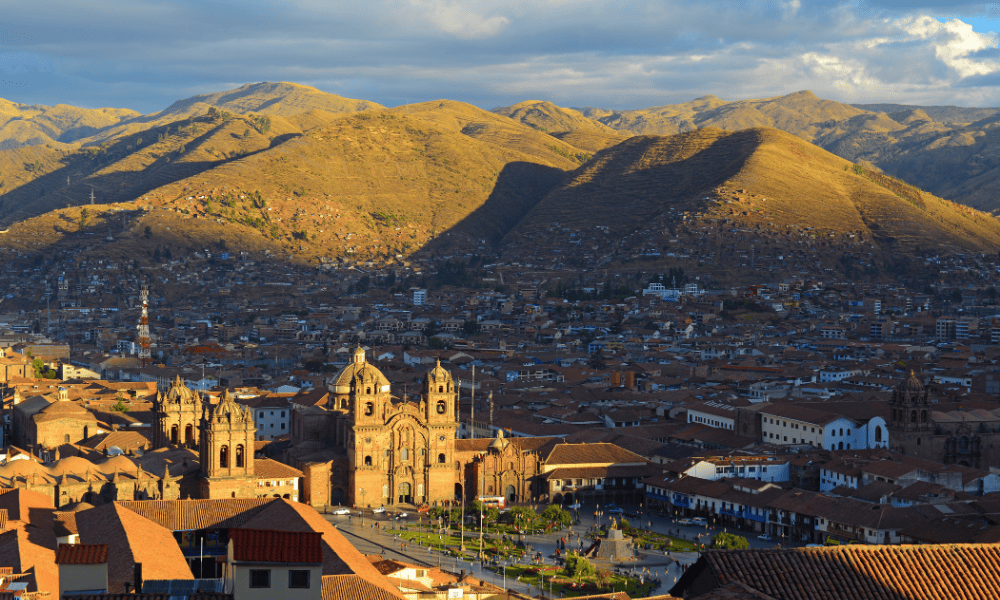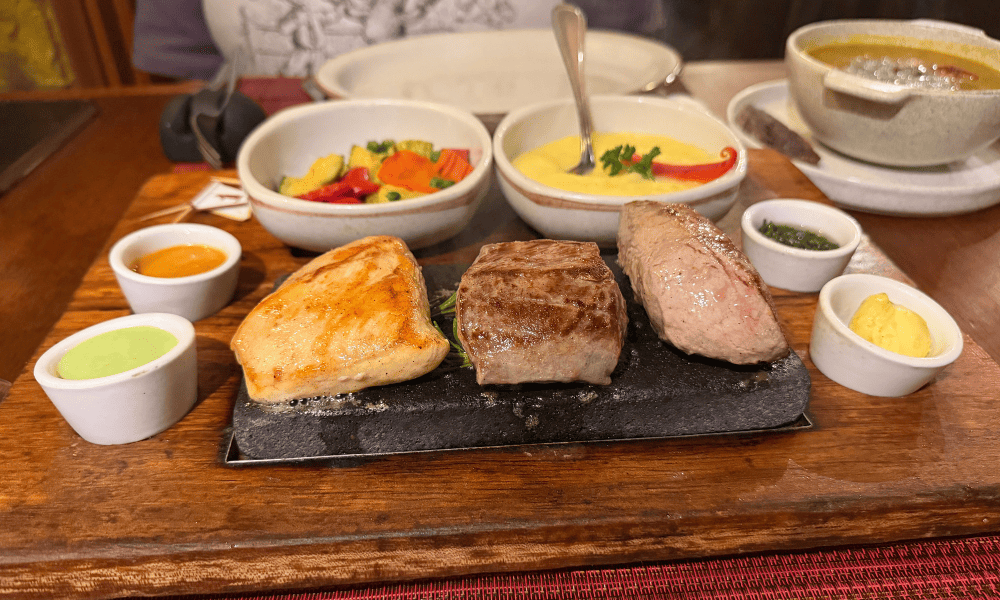
We ate our way across Peru with zero shame and zero regrets, and if you’re planning to do the same, the food in Peru genuinely deserves its reputation as one of the best on the planet. This isn’t a country where you eat to survive between sightseeing – it’s one where the eating is the sightseeing, and we learned that within about six hours of landing in Lima.
*Heads up, fellow travelers! Some of the links on this site are affiliate links, which means if you make a purchase or book an activity through them, we may earn a small commission (at no extra cost to you!). We only recommend things we absolutely love and believe will enhance your adventure. Your support helps us keep this site going, so thank you for being part of our journey!
Food in Peru at a Glance
Peruvian food isn’t one cuisine, it’s at least three, and it changes completely depending on where you are. Here’s the short version before we get into it region by region:
- Lima and the coast: ceviche, causa, lomo saltado, aji de gallina, anticuchos, chicharrón, chicha morada, world-class tasting menus (Maido, Central, Kjolle)
- Arequipa and the south: rocoto relleno, chupe de camarones, adobo arequipeño, salchipapa, queso helado, picantería culture
- Cusco and the Sacred Valley: cuy (guinea pig), alpaca, trucha, passionfruit cheesecake, Andean potatoes, choclo and cancha, chicha de jora
Why the Food in Peru Is Having a Moment in 2026
This November, Lima becomes the first South American city ever to host The World’s 50 Best Restaurants awards ceremony, and it’s the moment two decades of Peruvian food quietly building a global reputation finally comes to a head. We noticed it everywhere on our trip, not just in the tasting-menu spots – market stalls, roadside anticucho carts, and family-run picanterías all felt like part of the same wave.
Eating well in Peru is still remarkably affordable outside the handful of famous tasting menus – think S/15–25 (roughly $4–7 USD) for a generous market lunch, or S/40–70 (roughly $11–19 USD) per person for a proper mid-range sit-down meal.
Splurge at one of Cusco’s better restaurants and it’s still a fraction of Lima’s tasting-menu prices – we paid up to $60 USD total for a full dinner for two at some of our favourite spots there. Prices have crept up in tourist-heavy Lima since the World’s 50 Best announcement, so budget a little extra there this year.
Food in Lima: World-Class Dining and Everyday Classics
Lima is where Peruvian food goes to show off, and it earns the right to. This is a city where you can eat a $2 anticucho skewer from a street cart for lunch and a multi-course tasting menu built around ingredients from the Amazon and the Andes for dinner, sometimes on the same day.
Lima’s fine-dining scene is genuinely world-class right now – Maido, Central, Kjolle, and Astrid & Gastón have spent years trading places at the top of global rankings, and 2026 has only turned the spotlight up brighter.
Book well ahead if a tasting menu is on your list, or ask us and we’ll point you to newer names like Mayta and Mérito, which are just as exciting and far easier to get a table at.
Ceviche
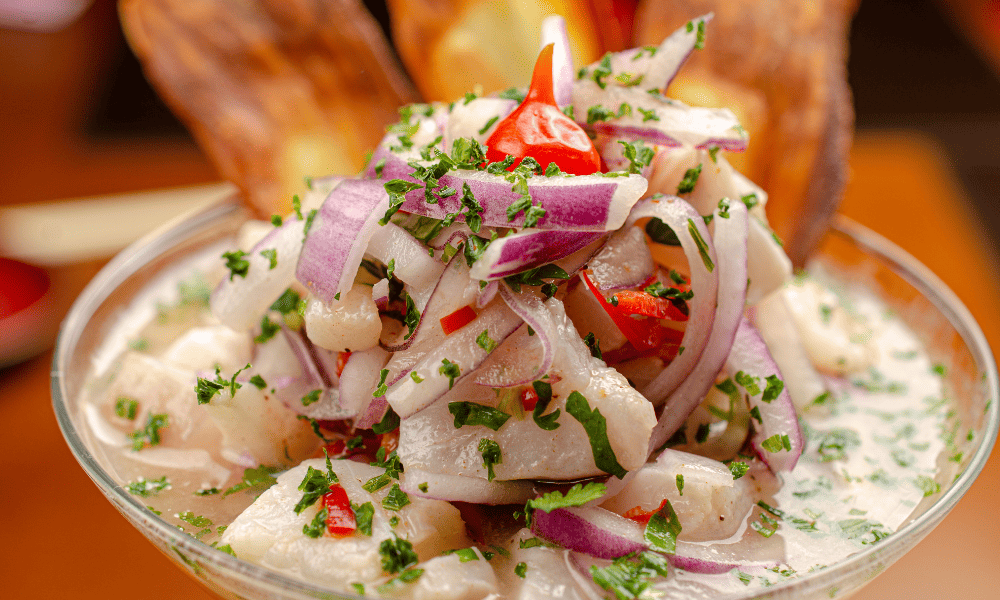
Ceviche is the one everyone knows, and Lima is where it’s done best – raw fish cured in lime juice, chilli, and red onion, served ice-cold with sweet potato and giant Peruvian corn kernels on the side. Eat it for lunch, never dinner; that’s when it’s freshest, and every local we asked agreed on that rule without hesitation.
Causa
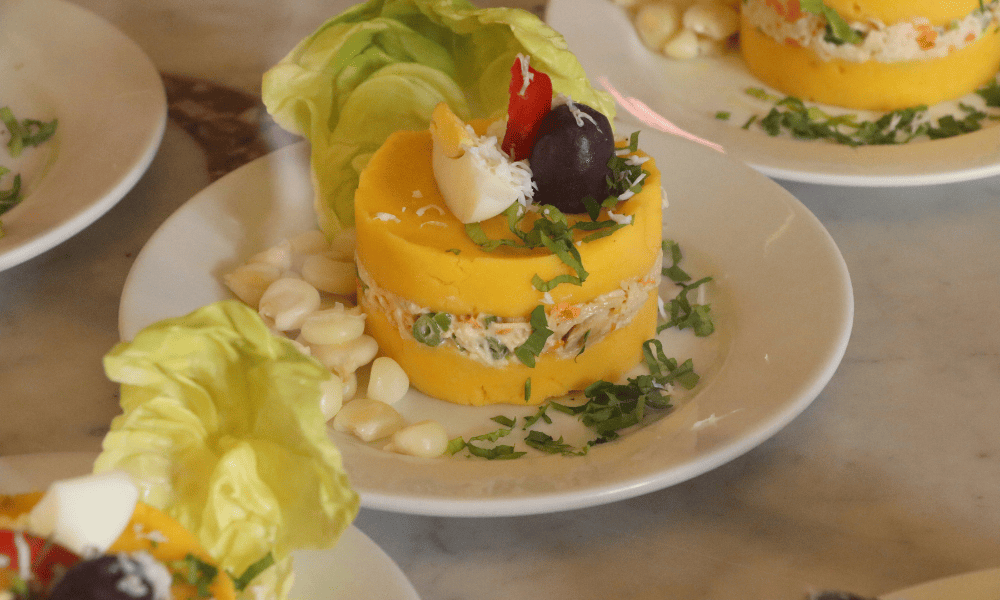
Causa is the one we fell hardest for – layers of mashed yellow potato, seasoned with lime and aji amarillo chilli, stacked with chicken or seafood and avocado in between. It looks like a cake and eats like the best potato salad you’ve ever had.
Lomo Saltado
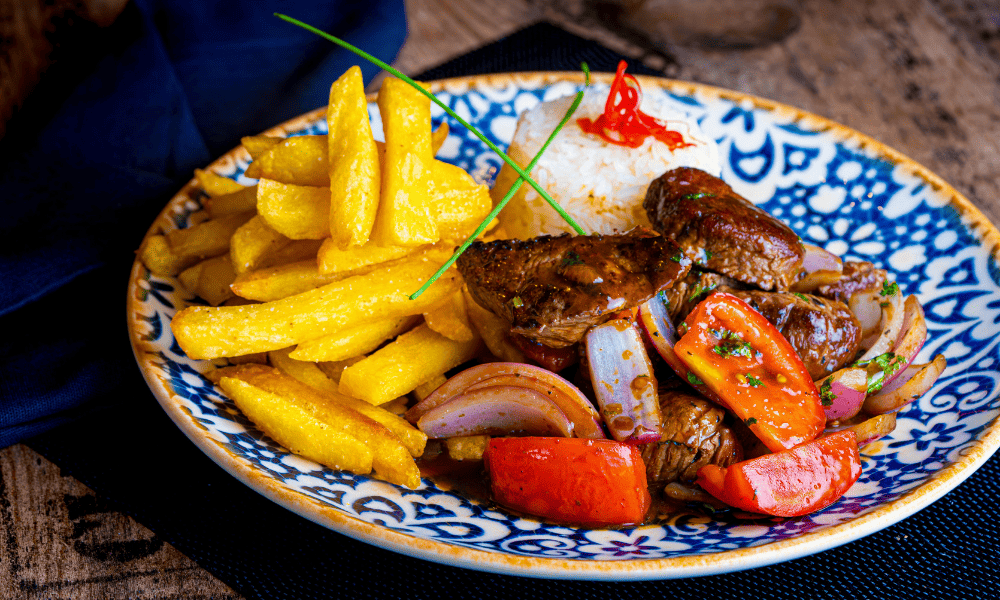
Lomo saltado is Peru’s most-exported dish for a reason: strips of beef stir-fried with onion, tomato, and soy sauce, served over fries and rice in one plate that shouldn’t work as well as it does. It’s proof of Peru’s Chinese immigrant history as much as anything you’ll read in a museum.
Aji de Gallina
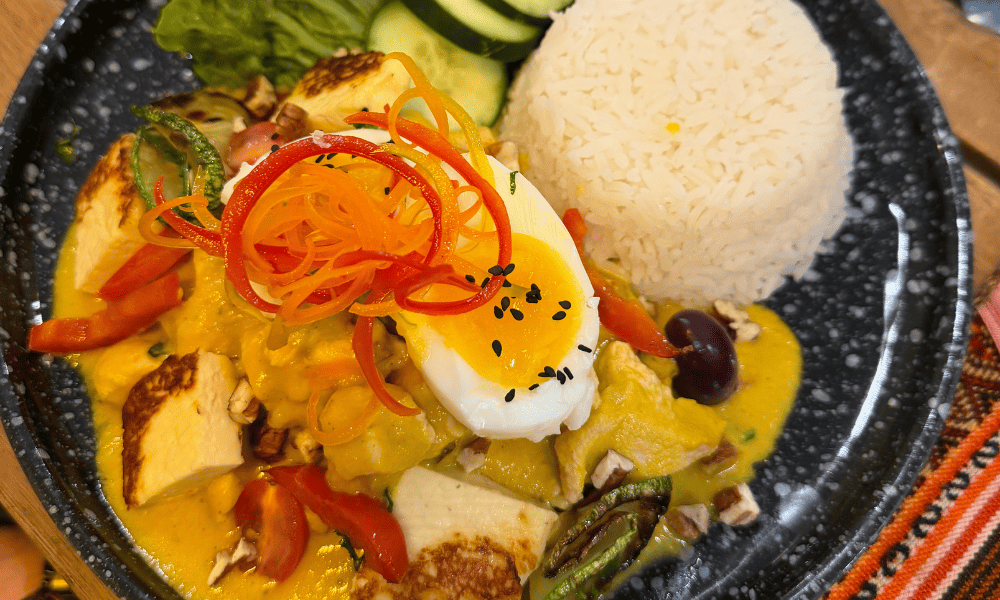
Aji de gallina might be the dish we recommend to first-timers more than any other – shredded chicken in a rich, creamy sauce built from aji amarillo (Peru’s signature yellow chilli), walnuts, and parmesan, served over rice with potato, egg, and olives. It’s comforting rather than fiery despite the chilli, and it’s the one dish we saw on genuinely every menu, from market stalls to Astrid & Gastón.
Anticuchos
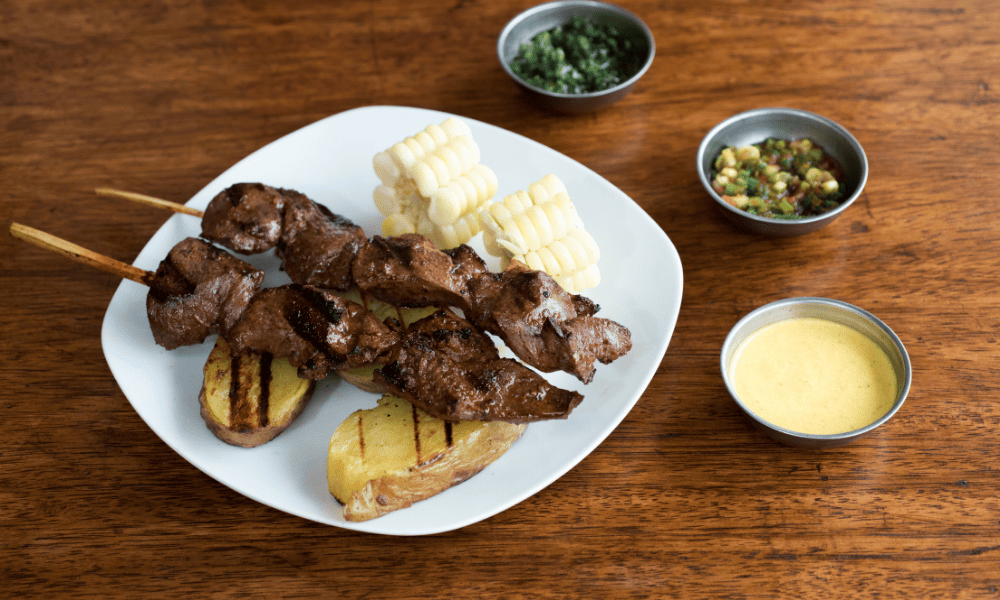
Anticuchos – skewers of marinated beef heart, grilled over coals – are street food at its most honest. We ate more of them from carts outside Barranco bars at midnight than we’d like to admit.
Chicharrón
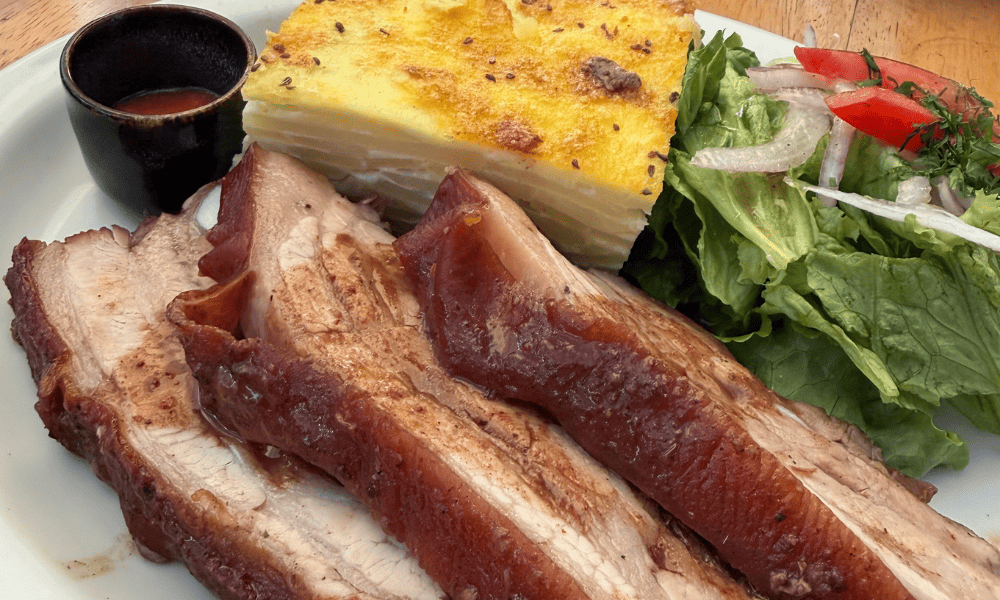
Chicharrón, deep-fried pork belly or pork chunks, is the base of Lima’s favourite breakfast sandwich, the sanguche de chicharrón – crispy pork piled into crusty bread with camote (sweet potato) and salsa criolla (pickled red onion). We started more mornings than we’d like to admit chasing one of these down before 10am.
It shows up differently outside Lima, too – in Arequipa we were served it as thick, slow-cooked slabs of pork rib and belly, glazed and crispy-edged, plated whole alongside a potato gratin rather than chopped into a sandwich. Same dish at heart, just a completely different presentation depending on where you order it.
Suspiro a la Limeña
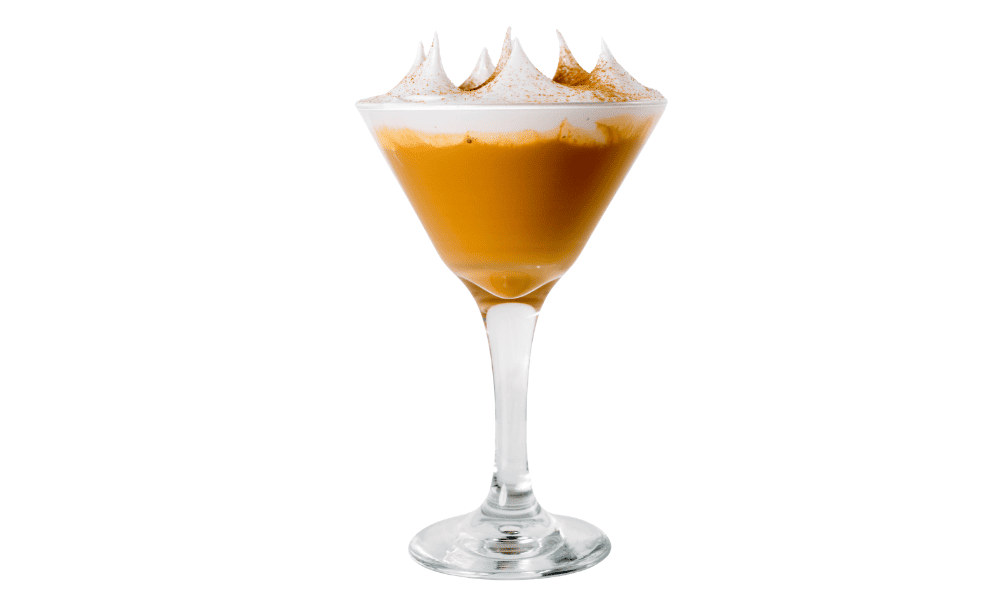
Suspiro a la limeña is Lima’s signature dessert, a dulce de leche custard topped with a sweet, boozy meringue that translates to “sigh of a Lima woman” – as dramatic as it sounds, in the best way. We’d order it just for the name if the taste didn’t back it up entirely.
Pisco Sour and Chilcano
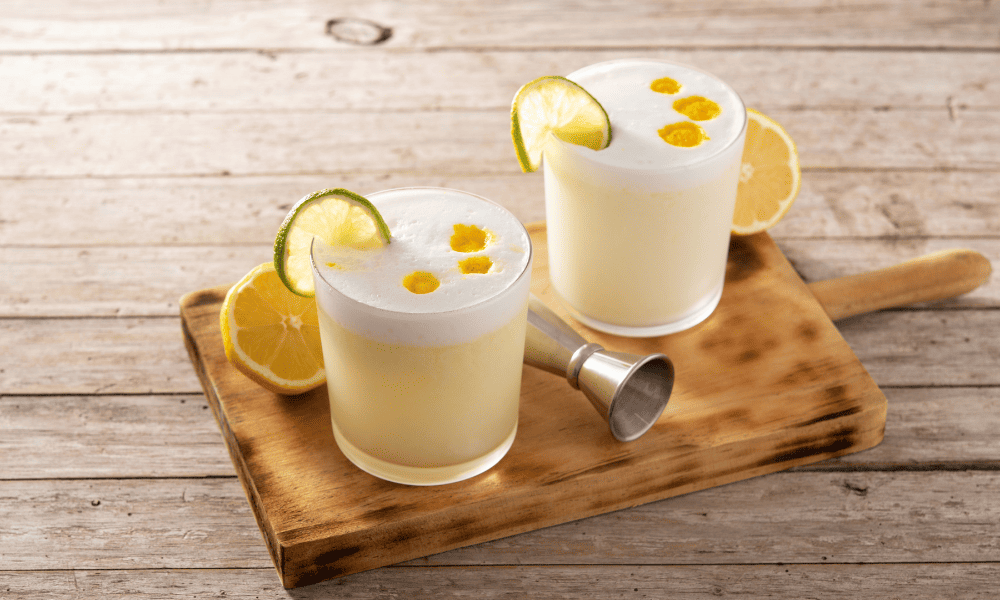
Order a pisco sour the moment you land – frothy egg white, fresh lime, and Peru’s grape brandy shaken cold, and genuinely one of the best welcome drinks in the world. Chilcano, pisco mixed simply with ginger ale and lime, is the lighter, easier-drinking option if you’re pacing yourself for a long night in Barranco.
Chicha Morada
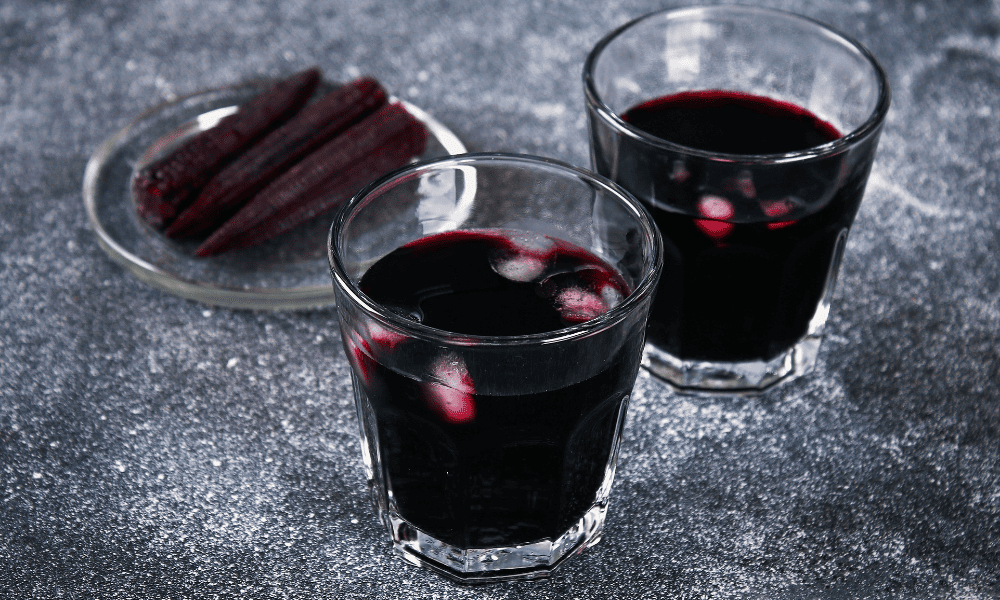
Chicha morada is Peru’s other chicha – a sweet, non-alcoholic drink made from boiled purple corn, pineapple, cinnamon, and clove, served ice-cold. It’s the drink you’ll find on literally every menu del día, and it became our go-to whenever we needed a break from pisco.
Where to Eat It: Lima’s Food Neighbourhoods
Miraflores is polished and oceanfront, home to Maido and most of the big-name reservations. Barranco, just south along the coast, is scruffier and more bohemian, with some of the best casual and mid-range eating in the whole city.
San Isidro is quieter and more residential, where Astrid & Gastón and a handful of other institutions sit among leafy streets and embassies. If you only have one full day to eat in Lima, we’d split it: markets and street food in the morning, Barranco for lunch, Miraflores for a splurge dinner.
👩🍳 Hands-on option: If you’d rather cook it than just eat it, this cooking class in Lima walks you through ceviche, causa, and a pisco sour from scratch – we’d genuinely recommend doing this on your first day, so you spend the rest of the trip recognising everything on the menu.
Food in Arequipa: Peru’s Spiciest, Most Underrated Table
If Lima is Peru’s food scene showing off, Arequipa is Peru’s food scene telling the truth. The White City, built from volcanic sillar stone, has its own entirely distinct cuisine, and it’s spicier, heartier, and – in our honest opinion – more underrated than anywhere else we ate in the country.
The picantería is how Arequipa actually eats – rustic, family-run restaurants that have been cooking the same recipes for generations, usually packed with locals rather than tourists. La Nueva Palomino and Sol de Mayo are two of the most respected, both worth the short taxi ride outside the historic centre to reach.
Rocoto Relleno
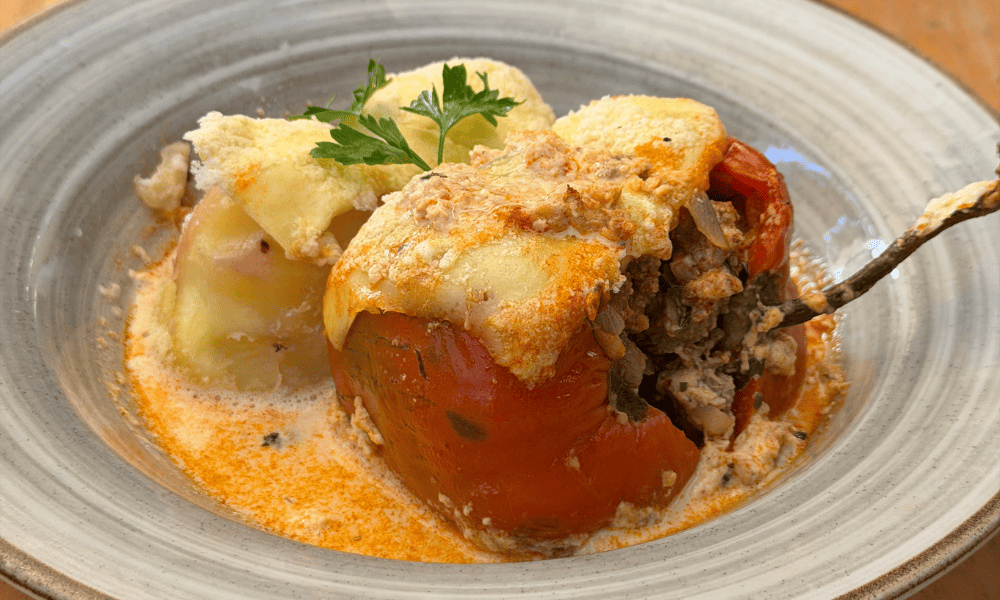
Rocoto relleno is the city’s signature dish and its spiciest by a wide margin: a whole rocoto pepper, hollowed out and stuffed with minced meat, peanuts, olives, and cheese, then baked until the top browns. We underestimated the heat exactly once and have respected it ever since.
Chupe de Camarones
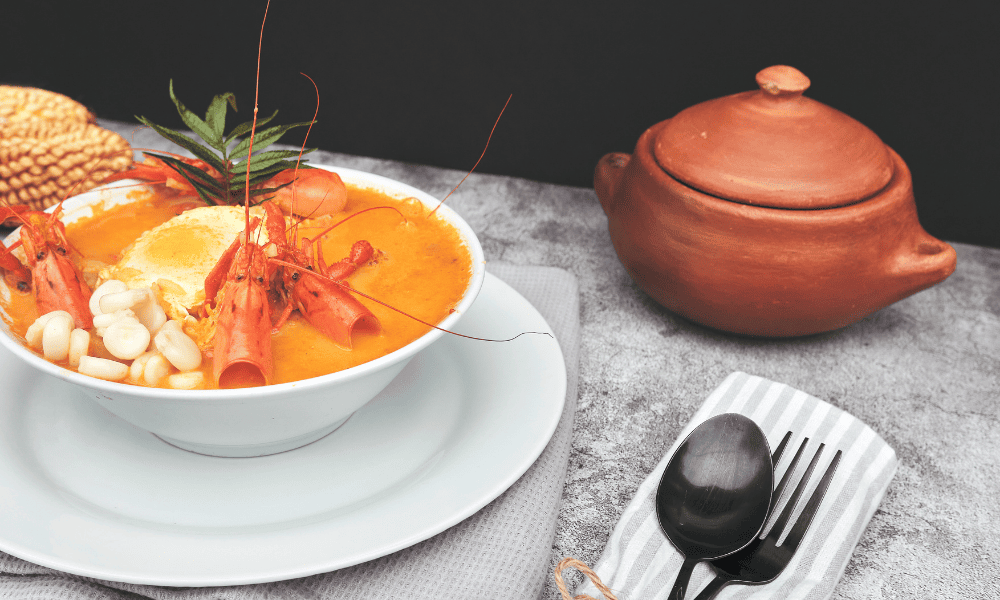
Chupe de camarones, a shrimp chowder thickened with potato, rice, milk, and fresh cheese, is the dish we’d order again before anything else on this list. Comforting, rich, and different at every picantería we tried it in.
Adobo Arequipeño
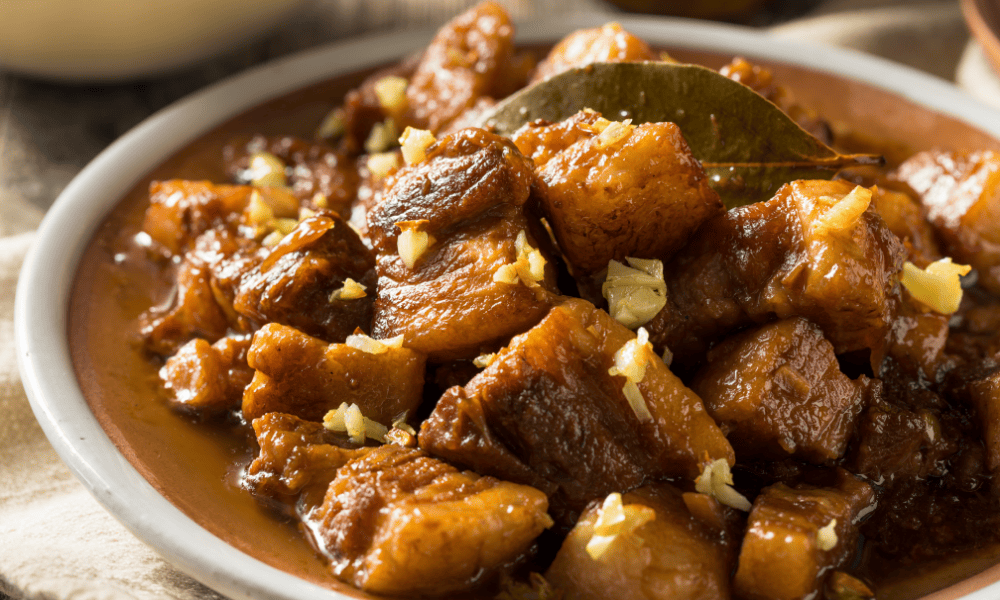
Adobo arequipeño is pork slow-marinated in chicha and vinegar, traditionally served as a Sunday breakfast dish. It felt strange ordering stew before 10am the first time and completely normal by the second.
Ocopa
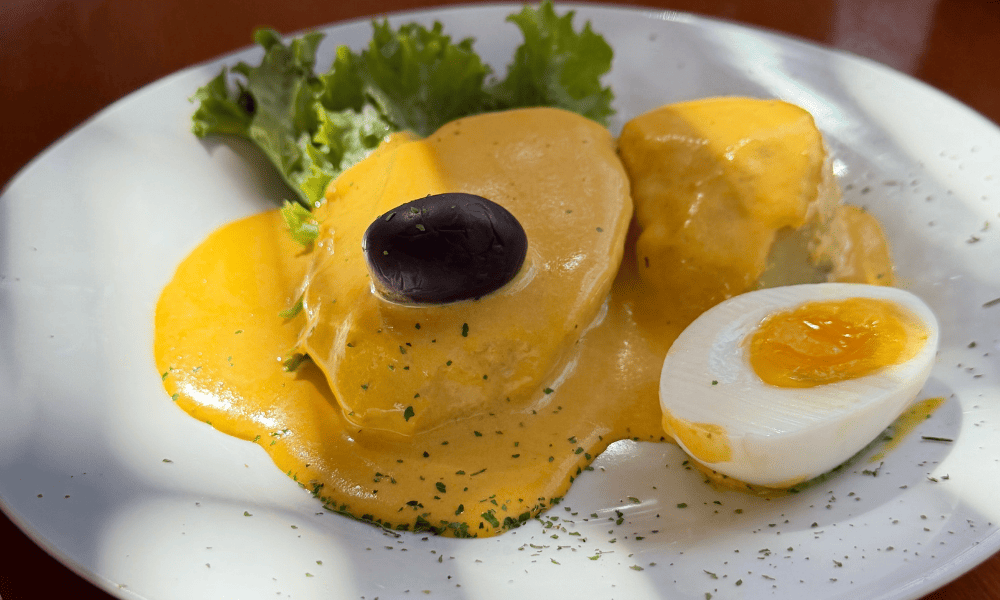
Ocopa is worth ordering even if you think you’re full: boiled potatoes under a bright yellow sauce of aji amarillo, huacatay herb, and cheese. It’s closer in spirit to a Peruvian pesto than anything else we can compare it to.
Salchipapa
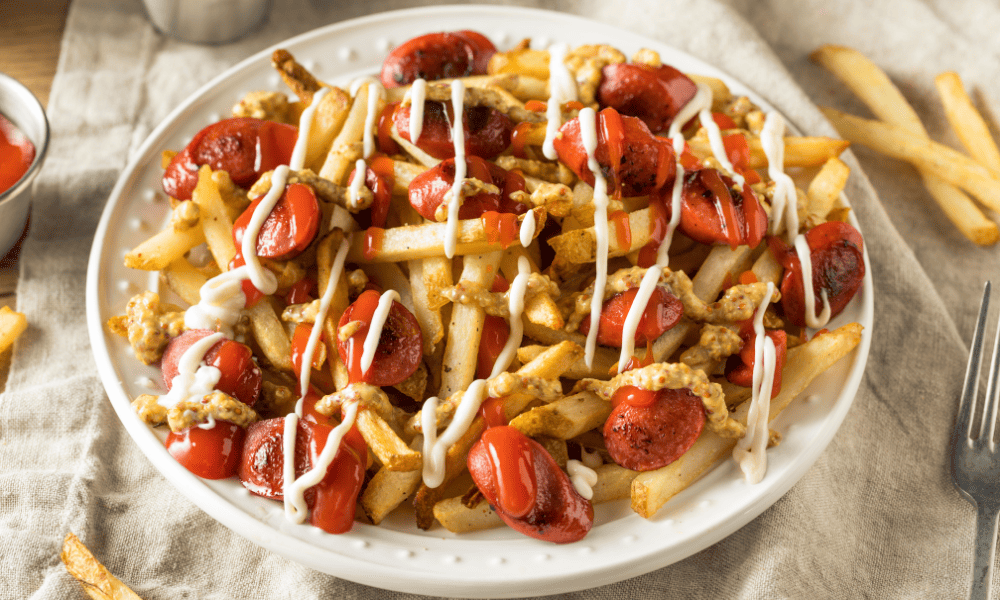
Salchipapa is Peru’s answer to late-night comfort food: a pile of fries topped with sliced grilled sausage, usually finished with a drizzle of mayo, ketchup, and huancaina or aji sauce. We ended up ordering it from a cart near the Plaza de Armas in Arequipa more than once, and it’s exactly the kind of unpretentious street food that balances out a week of picantería feasts.
Queso Helado
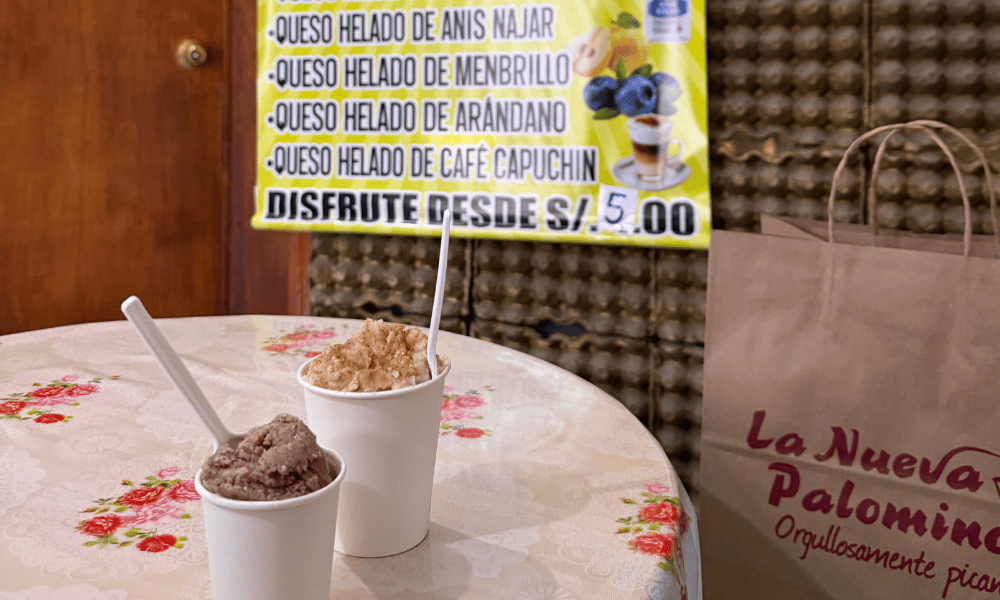
Queso helado – “cheese ice cream,” despite containing no actual cheese – is a frozen dessert of evaporated milk, cinnamon, and vanilla that’s more refreshing than its slightly alarming name suggests. We found ours at a local grandmother’s house a few streets from the centre, where you walk straight into her front room for a rotating list of flavours you won’t find anywhere else in the city.
This is the spot – easy to miss if you’re not looking for it, but hands-down the best queso helado we had in Arequipa, and we went back for seconds within the hour.
Chicha de Jora and Anís Najar
Chicha de jora, the fermented corn beer you’ll find all over the Andes, is poured straight from the jug at most picanterías here. Anís Najar, a local anisette liqueur, is the other one worth trying alongside the food.
🍫 A sweeter detour: Arequipa is also where we did our favourite hands-on food experience of the whole trip – the Chaqchao chocolate workshop, a bean-to-bar class where you roast, grind, and mould your own chocolate from Peruvian cacao. This is the exact workshop we booked – it’s the original Chaqchao experience, and still the best version of this we’ve done anywhere in Peru.
Food in Cusco and the Sacred Valley: The Andes on a Plate
Everything changes again once you climb up to Cusco and the Sacred Valley. This is Andean food at its most traditional – built around what actually grows at 3,000-plus metres, and the closest we felt to eating the way Peru has eaten for centuries.
Our favourite meal in the city was at Kusykay, just steps from Plaza de Armas – modern Peruvian cooking built on local, seasonal Andean ingredients, without the price tag of Cusco’s flashier tasting-menu spots.
📍 More on Cusco: We rank all our favourites in our full guide to the best restaurants in Cusco.
Cuy (Guinea Pig)
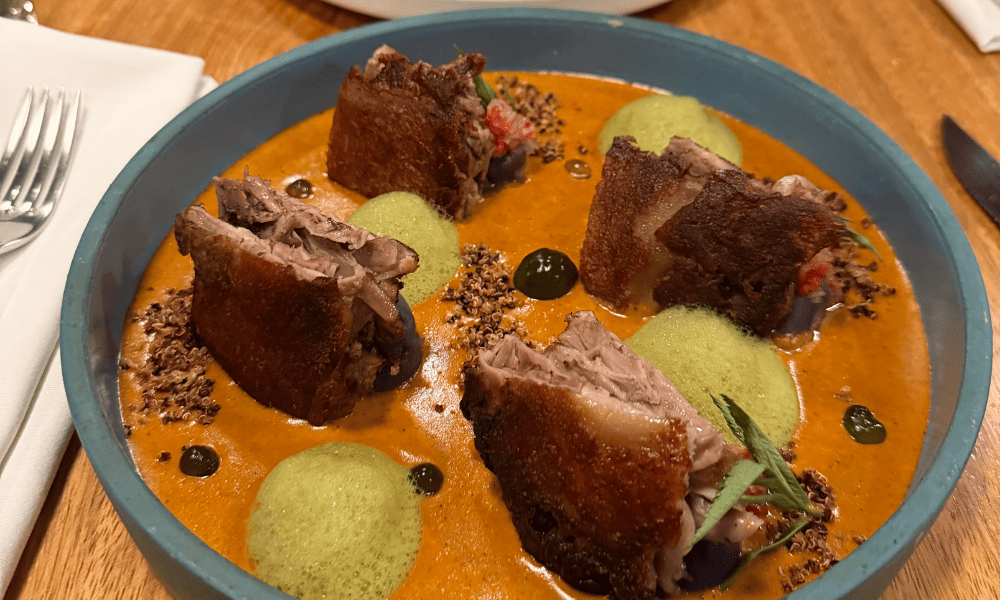
Cuy – guinea pig – is the dish every visitor asks us about, and yes, we tried it. It’s traditionally served whole, skin crisped and the head still on – sometimes even propped up with a little hat on for presentation – which honestly isn’t the most appetising way to be confronted with your dinner if it’s your first time.
We tracked down a restaurant in Cusco that serves it already broken down into pieces instead, which made it a much easier dish to actually enjoy: rich, a little gamey, closer to duck than chicken, and treated as a special-occasion dish rather than everyday food, so don’t expect it on every menu.
🍄 Where to get it in pieces: We list the restaurant that serves cuy already carved in our full guide to the best restaurants in Cusco.
Alpaca
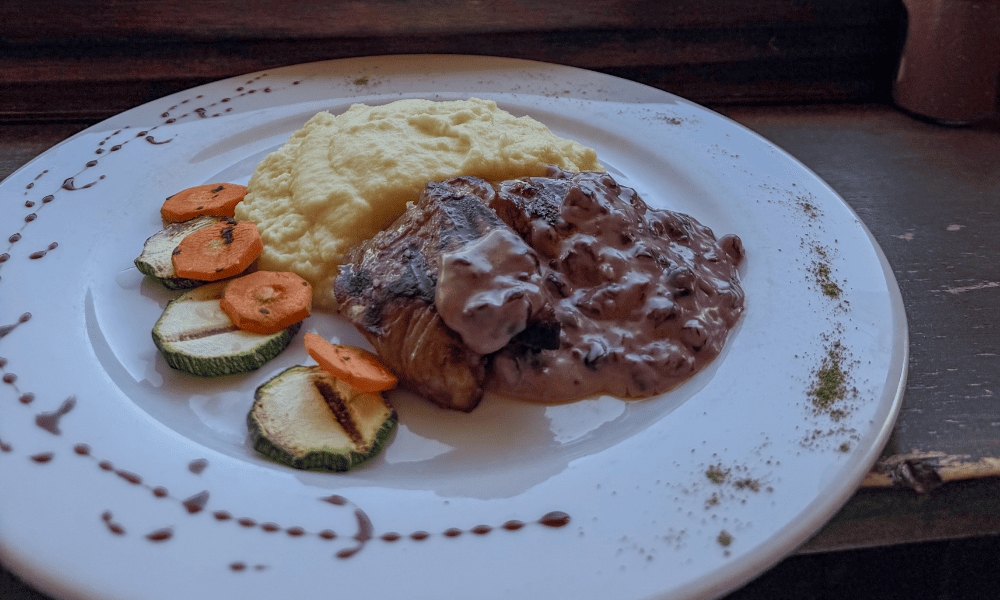
Alpaca shows up far more often than cuy, usually grilled as a steak or slow-cooked, and it’s worth trying once – but honestly, it wasn’t a highlight for us. It’s leaner than beef and can turn chewy if it’s even slightly overcooked, and we noticed it’s mostly ordered by tourists rather than something locals eat regularly. Nice to say you’ve had it, not something we’d go out of our way for a second time.
Trucha (Trout)
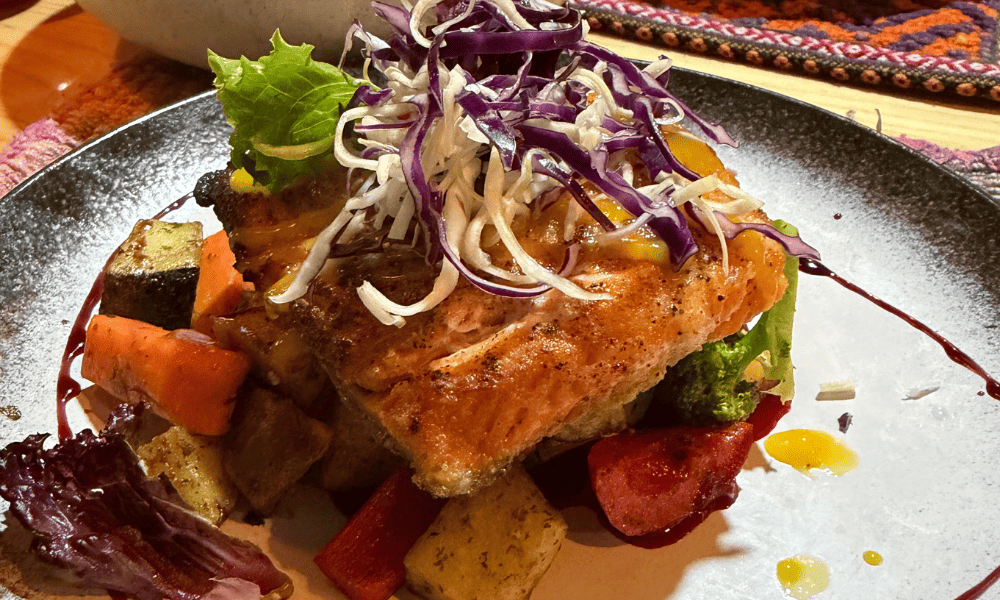
Trucha, farmed in the cold rivers running through the Sacred Valley, is the dish that shows up on nearly every comedor menu from Urubamba to Ollantaytambo, usually grilled whole or fried with garlic and served with rice and a salad. It’s simple compared to everything else on this list, and that’s exactly why it worked for us after a few days of richer Andean cooking.
Peru’s Potatoes
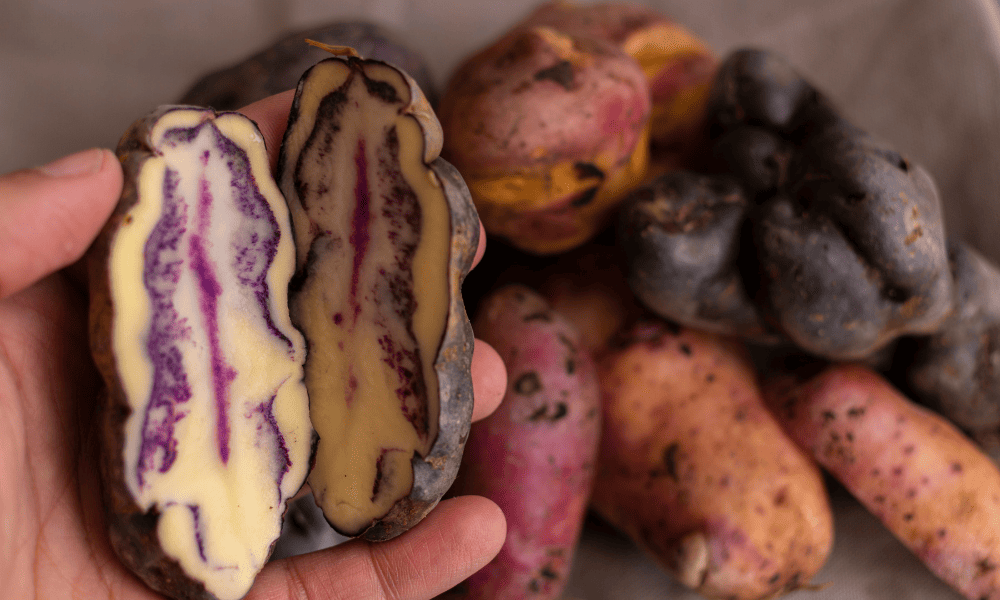
Peru treats the potato with a reverence we’ve never seen anywhere else – over 3,000 varieties are grown here, and San Pedro Market in Cusco has an entire aisle dedicated to colours and shapes we couldn’t name. Papa a la huancaina, sliced potatoes under a spicy, creamy cheese sauce, and papas rellenas, deep-fried mashed potato stuffed with meat, both became trip staples for us.
Choclo and Cancha (Andean Corn)
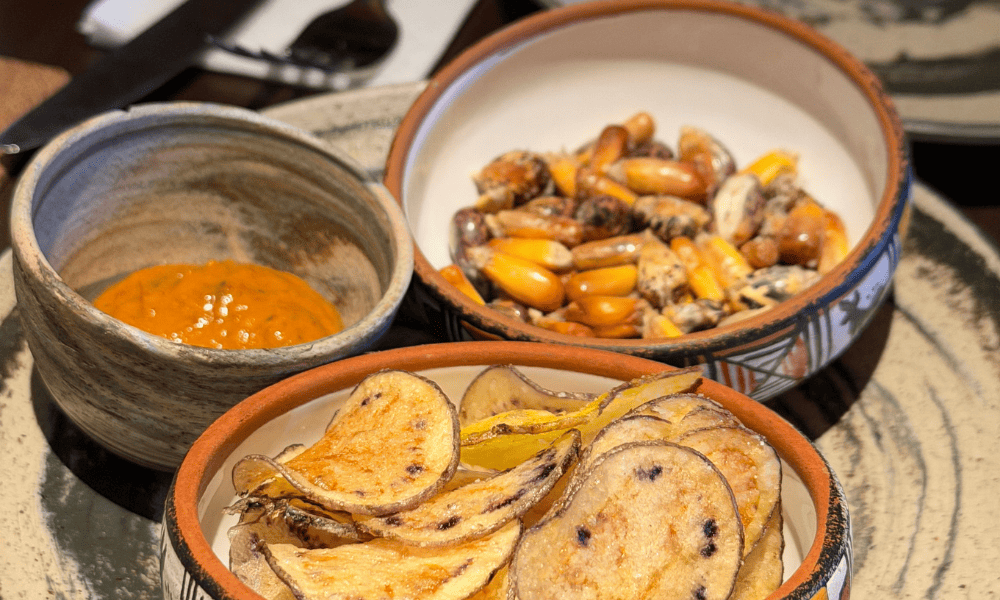
Choclo, Peru’s giant-kernelled corn, turns up boiled and served alongside almost everything, plus roasted from street carts. Cancha, toasted corn kernels served as a bar snack, is the one we genuinely could not stop eating with a pisco sour in hand.
Passionfruit Cheesecake
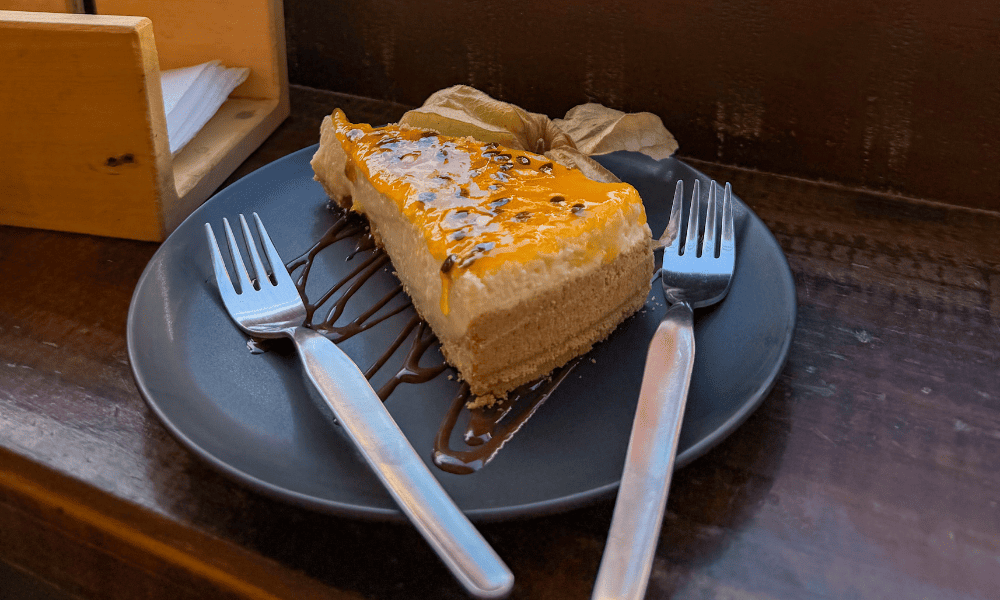
Passionfruit cheesecake, or cheesecake de maracuyá, turned up on nearly every dessert menu we saw around Cusco and the Sacred Valley, and we’re not exaggerating when we say we ordered it more than any other dessert on this list.
The tartness of the passionfruit cuts through the creamy base perfectly, and it’s proof that Peru’s Amazon-grown fruit finds its way even into desserts that started out as someone else’s national dish.
Chicha de Jora in the Andes
Find a proper chichería – a family-run spot serving chicha de jora alongside cuy and other traditional dishes – if you want to eat the way Cusco actually eats. Look for the red plastic bag or flag hanging outside a doorway; that’s the local signal a chichería is open and pouring.
👩🍳 Cook it yourself: This cooking class and market tour in Cusco starts with a guided wander through San Pedro Market’s potato and produce stalls, then moves into a kitchen to cook ceviche, lomo saltado, and a pisco sour – it’s the same one we’d book again ourselves.
Cusco’s food history goes deeper than the Andes, too – cacao has been traded through this region for centuries, and ChocoMuseo does a genuinely good job of explaining why Peruvian chocolate gets so much attention internationally.
🍫 Another hands-on option: We did the chocolate-making workshop at ChocoMuseo on a whim, on a day we had nothing else planned, and it turned into one of our favourite few hours in the city.
🏔️ Beyond the food: Our full Cusco things-to-do guide covers everything else worth your time in the city.
Eating in the Sacred Valley
The Sacred Valley slows everything down, and the food follows suit – smaller family-run comedores serving trout from the local rivers, roasted cuy on weekends, and some of the freshest vegetables we ate anywhere in Peru.
Moray and Maras are worth timing a lunch around, since the ancient agricultural terraces there are still used to grow some of the same crops that end up on your plate an hour later.
We based ourselves in the valley for a few days at a slower pace rather than doing it as a single packaged tour, and it’s exactly how we’d recommend eating your way through it too.
🗺️ Plan the whole trip: Our 3-week Peru itinerary covers exactly how we structured this stretch, food stops included.
Practical Tips for Eating Your Way Across Peru
When to Go
Dry season, May to September, gives you the most reliable weather for Cusco and the Sacred Valley, though it’s also peak season with higher prices at restaurants that see a lot of tourist traffic. Lima and Arequipa are far less weather-dependent for eating purposes, so it’s really the Andean leg of the trip where timing matters most.
Getting Between Lima, Arequipa, and Cusco
Most people fly between the three, and domestic flights are short – around ninety minutes Lima to Cusco, a little less to Arequipa. We compared bus and flight options on Omio before booking each leg, since it pulls together most of Peru’s domestic operators in one place.
Where to Stay
Book accommodation close to the neighbourhoods where you actually want to eat – Miraflores or Barranco in Lima, the historic centre in Arequipa, San Blas or just below Plaza de Armas in Cusco. We compared options on Booking.com in each city before settling in, and it’s worth noting you may occasionally need a VPN to load it properly on some Peruvian networks.
Connectivity
Get an Airalo eSIM installed before you land – it’s the easiest travel hack we use anywhere now, and it means you can pull up a restaurant’s location or reviews the second you’re hungry, without hunting for a SIM kiosk first.
A Note on Safety and Value
Peru’s tourist regions remain firmly in the “exercise increased caution” category on most travel advisories, which in practice means normal city precautions rather than anything specific to eating out.
Prices are still genuinely good value outside the handful of world-famous tasting menus, though it’s worth checking current rates before you book anything major, since Lima’s hosting of the World’s 50 Best Restaurants this November has pushed demand – and prices – up across the city’s top-tier restaurants.
A Few More Things We Picked Up Along the Way
- Seafood is a Lima thing. Stick to ceviche and other raw or lightly-cooked seafood on the coast – once you’re up in Cusco or Arequipa, far from the ocean, it’s not reliably fresh anymore.
- Be a little careful at markets. Market food is some of the best eating in the country, but hygiene standards vary a lot stall to stall – go where you see a queue of locals rather than the emptiest stall.
- Card payments are widely accepted. Almost everywhere we ate, even smaller local spots, took cards – we carried far less cash than we expected to need.
- You’ll often get a free starter. Plenty of restaurants bring out free roasted corn or chips with a dip before you’ve even ordered – a nice touch, and a good sign the kitchen takes pride in the details.
- Chicha morada is very sweet. Go in expecting something closer to a dessert drink than a refreshing juice, especially if you’re not used to a lot of sugar.
Our Last Bite
We came to Peru expecting good ceviche and left with a completely different understanding of what a country’s food can tell you about its history – Japanese knife technique in Lima, volcanic-stone kitchens in Arequipa, potatoes grown at altitudes that would leave us breathless just standing there. The food in Peru isn’t a side note to the trip. For us, by the end, it basically was the trip.
Go hungry, order the thing you can’t pronounce, and don’t skip the picanterías just because they’re not on anyone’s ranked list. Those were the meals we still talk about.
FAQ: Food in Peru
What is Peru’s national dish?
Ceviche is Peru’s national dish — raw fish cured in lime juice, chilli, and red onion, served cold with sweet potato and giant Peruvian corn. Lima is where it’s done best, and the one rule locals swear by: eat it for lunch, never dinner, since that’s when it’s freshest.
Is Peruvian food spicy?
Not as a rule. Most Peruvian dishes use aji amarillo (yellow chilli) for flavour rather than heat, so things like aji de gallina are more savoury than fiery. The real exception is rocoto relleno from Arequipa — a whole stuffed rocoto pepper that’s genuinely hot, and the one dish on this list we underestimated exactly once.
Is it safe to eat street food in Peru?
Generally yes, and some of the best meals we had in Peru came from a cart or market stall. The practical rule we followed: go where you see a queue of locals rather than the emptiest stall, stick to food cooked fresh in front of you, and be a little more cautious with anything raw or pre-prepared sitting out at markets. If you’d rather have a guide do the vetting for you, a hands-on cooking class in Lima is a good way to start.
Do people in Peru actually eat guinea pig (cuy)?
Yes, but it’s a special-occasion dish rather than everyday food, mostly eaten in the Andean regions around Cusco and the Sacred Valley. It’s traditionally served whole, skin crisped and head still on, which can be a lot for a first-timer — we found a restaurant in Cusco that serves it already carved into pieces instead, which we cover in our full guide to the best restaurants in Cusco.
How much does food cost in Peru?
Eating well is still remarkably affordable outside the famous tasting menus. Budget roughly S/15–25 (about $4–7 USD) for a generous market lunch, or S/40–70 (about $11–19 USD) per person for a proper mid-range sit-down meal. Even a full dinner for two at some of Cusco’s better restaurants came to around $60 USD total for us. Prices have crept up in tourist-heavy Lima since it was announced as host of the World’s 50 Best Restaurants, so budget a little extra there.
What’s the best city in Peru for food — Lima, Arequipa, or Cusco?
They’re not really competing, since each does something different. Lima is where you’ll find world-class tasting menus alongside classics like ceviche and lomo saltado. Arequipa has the spiciest, most underrated cooking in the country, built around family-run picanterías. Cusco and the Sacred Valley are the most traditional, built around what actually grows at altitude — potatoes, corn, trout, alpaca, and cuy. If you only have time for one region’s food scene, Lima has the most range; if you want the most authentic, local experience, it’s Arequipa.
What should I drink in Peru besides pisco?
Chicha morada is the one to try — a sweet, non-alcoholic purple corn drink flavoured with pineapple, cinnamon, and clove, on the menu at pretty much every restaurant. It’s very sweet, closer to a dessert drink than a refreshing juice, so go in with that expectation. If you want the fermented, slightly alcoholic version instead, look for chicha de jora, poured straight from the jug at picanterías and chicherías across the Andes.
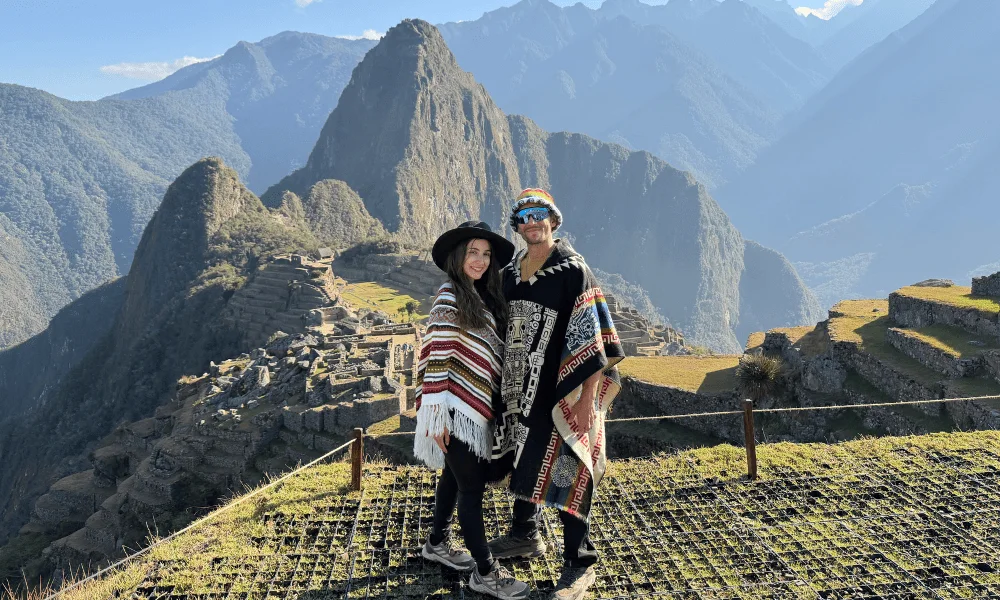
Written by Ru & Tiago
We ate our way across Peru in 2026, from Lima’s tasting menus to Arequipa’s spiciest picanterías and Cusco’s Andean classics. Based in Geneva, we specialise in honest, active trip guides built around real experience, not recycled checklists.