A 3 am pickup in Cusco, four days of dust, steep stairs and very little air, and then our first view of Machu Picchu from the Sun Gate. That was our Classic Inca Trail with Alpaca Expeditions in early August 2026, and it was one of the best things we’ve ever done.
This is our Alpaca Expeditions Inca Trail review: what we paid, what each day was really like, how much we tipped, and everything we’d want a friend to know before booking.
Quick note first: nobody paid us for this. We booked and paid for the trek ourselves, and Alpaca Expeditions gives us nothing for this review. We just want to help other hikers decide.
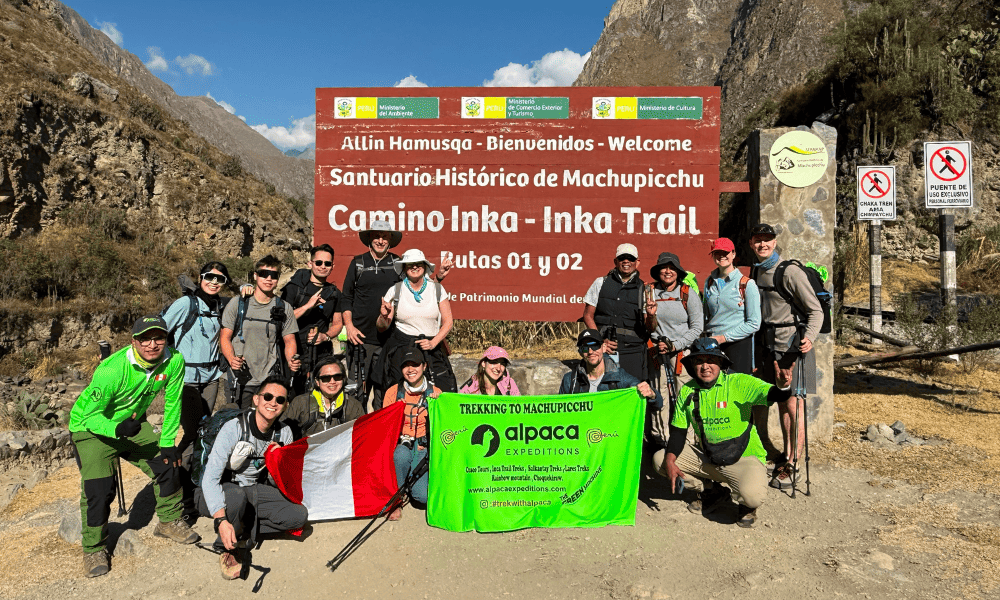
⚡ The short version: We’d book Alpaca Expeditions again in a heartbeat. The food was the best we’ve had on a trek, the guides kept an eye on our oxygen, and our group even had its own toilet. Day 2 is tough and the start on day 4 is freezing, but none of it spoiled the trek.
💡 Still choosing an agency? Our guide on how to choose an Inca Trail agency has the questions to ask, and our Inca Trail packing list tells you what to bring.
*Heads up, fellow travelers! Some of the links on this site are affiliate links, which means if you make a purchase or book an activity through them, we may earn a small commission (at no extra cost to you!). We only recommend things we absolutely love and believe will enhance your adventure. Your support helps us keep this site going, so thank you for being part of our journey!
| 🥾 Trek | Classic Inca Trail, 4 days / 3 nights |
|---|---|
| 🏢 Agency | Alpaca Expeditions, Cusco |
| 📅 When | Early August 2026 (high season) |
| 🗓️ Booked | 8 months ahead |
| 👥 Group | About 16 hikers, 2 guides, 2 cooks and 22 porters |
| 💵 Price | $912 per person, rentals included (card fee extra) |
| 🙏 Tips | About 200–220 soles per person for porters and cooks, plus the guides |
| 🏛️ Machu Picchu | Circuits 1 and 3 on our ticket |
How Much the Inca Trail Cost Us (and How We Paid)
We paid $912 per person, and that already included our rentals. Without them, the trek itself came to about $835 each. The card fee was not included in that, so it came on top. Here’s the full breakdown.
| Trek + rentals | $912 per person |
|---|---|
| Walking poles (included) | $22 |
| Sleeping bag (included) | $30 |
| Air mattress (included) | $25 |
| Deposit | $633 for the two of us, by PayPal |
| Balance | Paid in person in Cusco by card, about 5% extra in fees |
| Booked | 8 months ahead, because we went in high season |
We paid the deposit by PayPal and the rest in person in Cusco, by card, which added about 5% on top of the $912 in August 2026. Cash is tricky for us because we live in Europe and they only take dollars.
If you’re coming from the US, you’ll probably save the fee by bringing dollars in cash, so ask the agency first.
💡 Tips aren’t included in the price. More on that below, and bring cash in soles for them.
The Briefing and the Duffel Bag
The evening before the trek, there’s a briefing in Cusco. (If you’re staying in the Sacred Valley, you can do it a few days earlier with another group.)
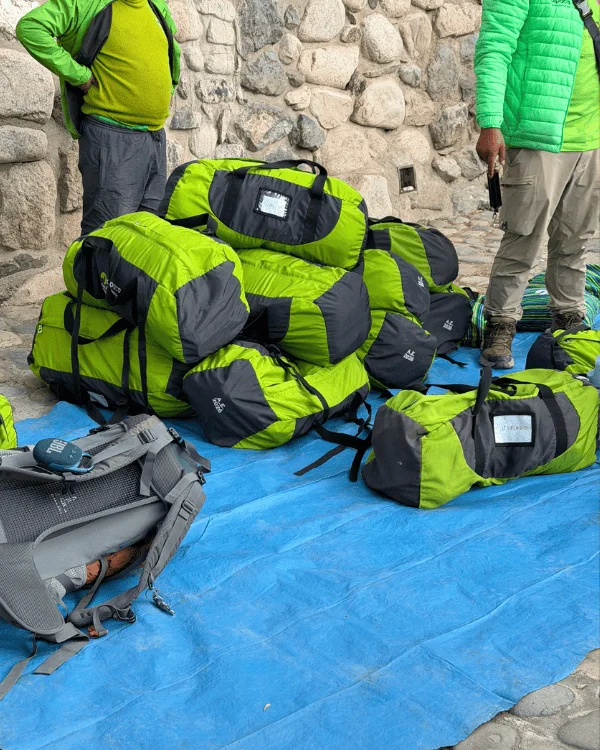
They walk you through the plan, you meet your guide and some of your group, and you get your named duffel bag. Your own things go in there, together with the rented sleeping bag, pillow and mattress.
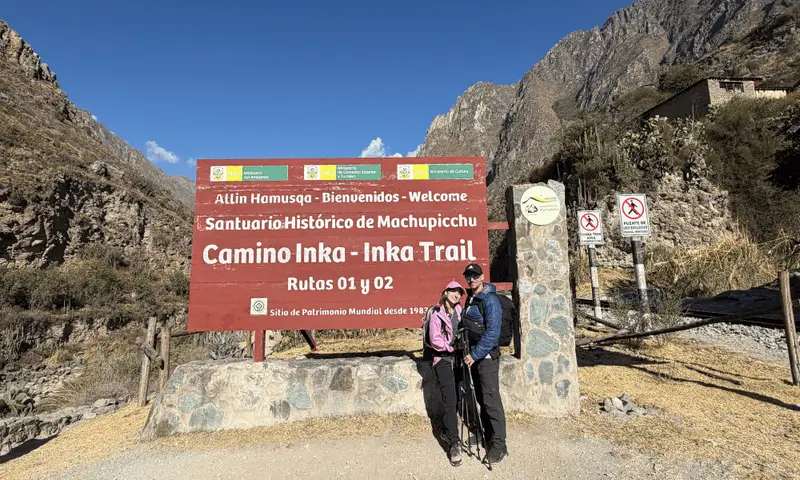
Our pickup from the hotel in Cusco the next morning was at 3 am. Yes, 3 am! We drove via Ollantaytambo and had breakfast at the start of the trail, which is also where they hand out the rented gear and weigh the bags.
🎒 The weigh-in is strict. You can carry up to 7 kg, and that includes your sleeping gear. It’s more or less enough, but most of our group had to move things into their daypack on the spot, so leave some space in yours. You only get your duffel back at camp at dinner, and you hand it in again in the morning. Our packing list shows what we took.
How a Day on the Inca Trail Works
A few things are the same every day, so here they are once, before we get into the days.
Hiking at Your Own Pace
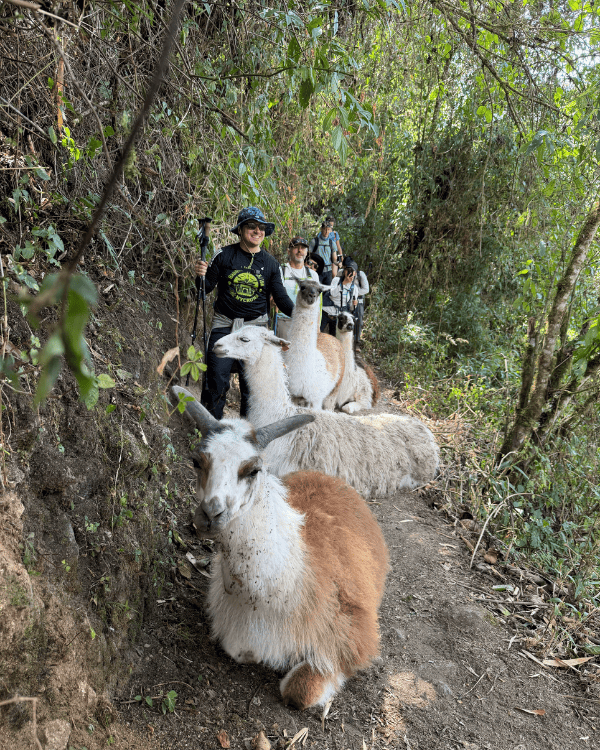
You have two guides: one always walks at the front of the group, and the other always at the back with the last hikers. Everything in between is up to you, and you can hike at your own tempo.
If you’re one of the first, there are just a few stops where you wait for the others and get a briefing together. The rest of the time, you do your own thing. And you’re never alone out there, because there are lots of other groups on the trail.
What Alpaca Expeditions Takes Care Of
What they took care of:
- At the start, each of us got one small clean towel for our face and hands, and we kept it until the end.
- Every morning and evening, a pot of warm water appeared in front of our tent for washing.
- At breakfast, lunch and dinner, we could refill our bottles and water bladders with clean water.
- Coca tea at breakfast was our wake-up call.
- The team also brings coca leaves along, in case you want to chew some on the trail. The porters chew them too, and people say it helps with the altitude.
- They measured our oxygen, and if someone felt off, they had oxygen, pills or teas ready.
- The porters always reached camp before us and had everything set up, and our group had its own toilet.
Food and Camp Evenings
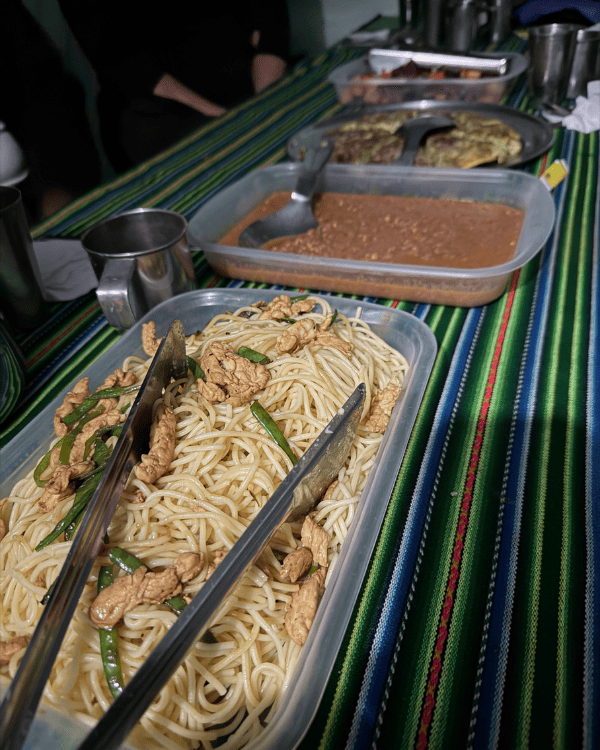
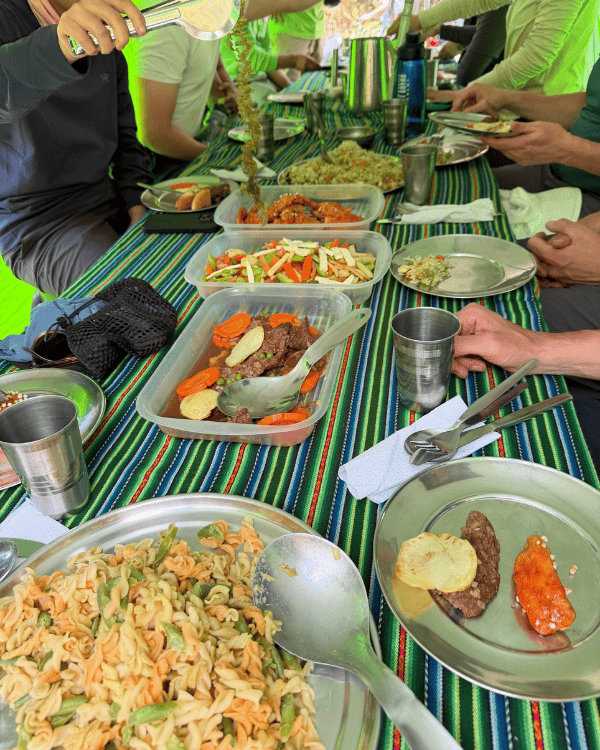
And the food! It was the best we’ve had on any trek. Lunch always started with a soup, followed by two or three proteins, two or three carb sides like rice and pasta, and vegetables, and every meal was different.
The cooks were amazing, and breakfast was just as good, although sometimes we got it to go because we had to leave early.
Every evening there’s “happy hour” around 6–6:30 with popcorn, tea and snacks, and dinner is ready around 7. It’s the best bonding time with the group.
Day by Day
Here’s how our four days went.
Inca Trail Day 1: Long, Dusty and Not Too Hard
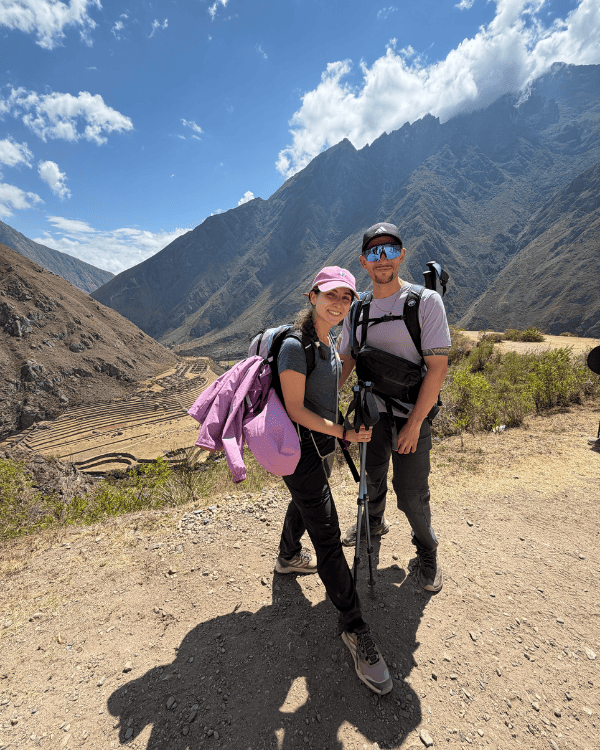
📍 Day 1: Long but mostly flat, with a bit of uphill. Plenty of toilet and snack stops. About 14 km, camp at 3,300 m.
The start surprised us. It was much easier than we expected, but also much busier: so many people start at the same time, and the trail is full of hikers all day. Along the way, grandmas sell snacks and toilet tickets for 1–2 soles, so always carry some coins.
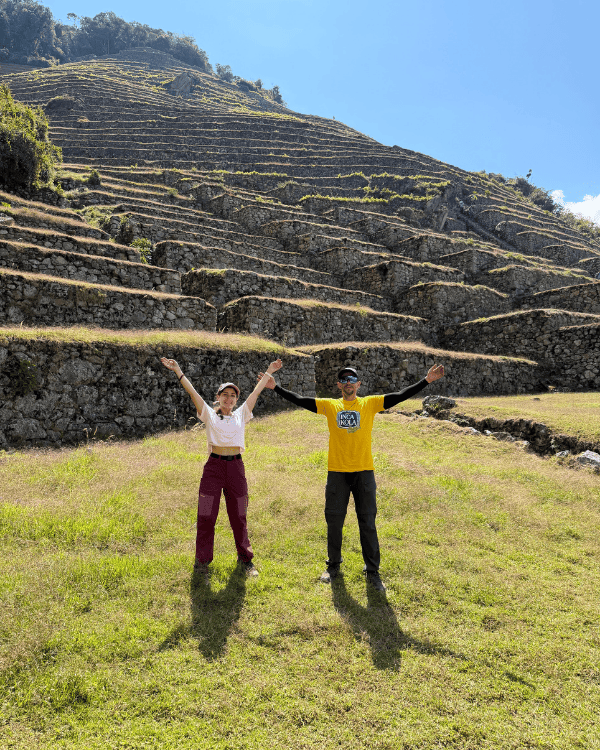
It’s a long day, but not a hard one. There are plenty of places to rest, use a toilet and buy snacks, and you stop at some ruins where you learn a lot. The only catch is the dust: you end the day filthy, so wear dark pants.
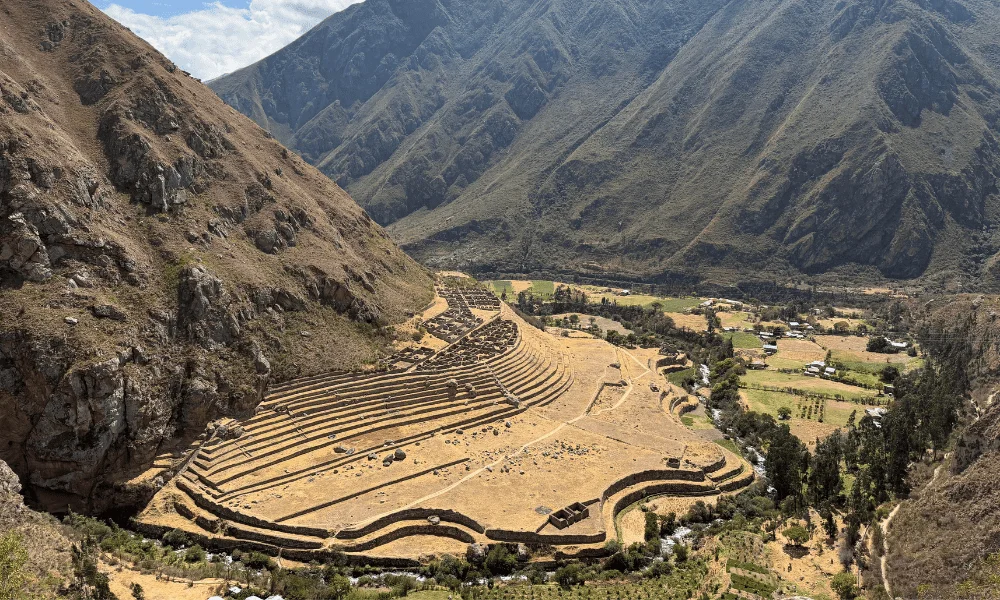
What impressed us most on day 1 was the team. We couldn’t believe how much the porters carry, and by the time we reached camp, the tents were already up and waiting. The food surprised us too: way more than we expected, and cooked really well.
Inca Trail Day 2: The Hardest Day
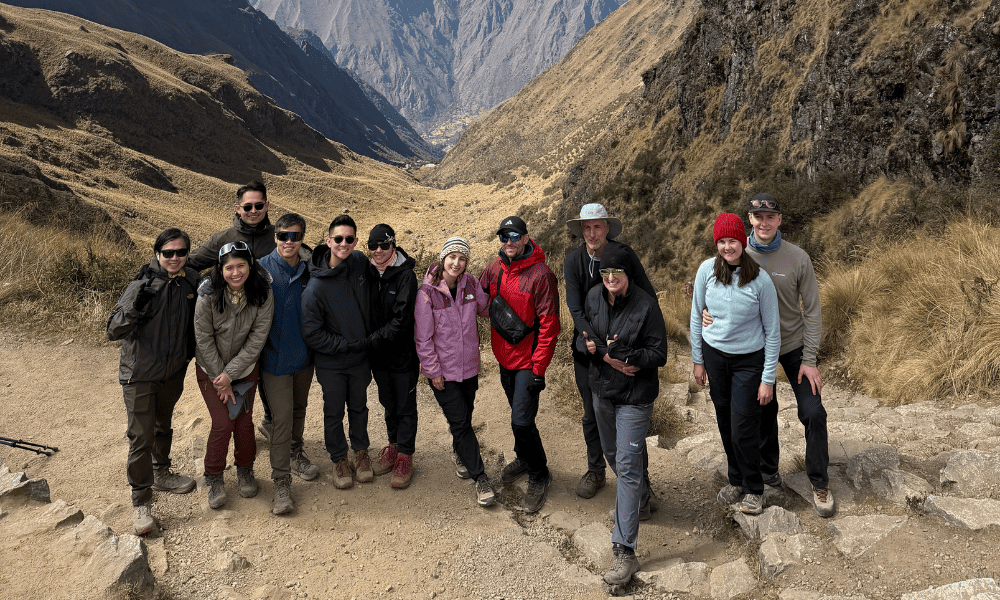
📍 Day 2: The toughest day. You climb two hills, one of them Dead Woman’s Pass (4,215 m), the highest point. About 16 km, camp at 3,600 m.
This was the hardest day for me (Rumi). There’s very little air up there, so I went very slowly, with small steps and lots of breaks to catch my breath.
Tiago, on the other hand, was flying up those mountains and was often among the first hikers in the group. Our group was spread out all day, and everyone walked at their own tempo.
Every now and then we met other group members along the way and rested together for a bit, before everyone continued at their own speed. Your guides look after you all day, and it’s your last chance to buy snacks and use the shop toilets. Our porters carried everything up those hills and still beat us to camp. Real warriors.
Camp sits very high, and after a day like that, reaching it at sunset felt incredibly rewarding.
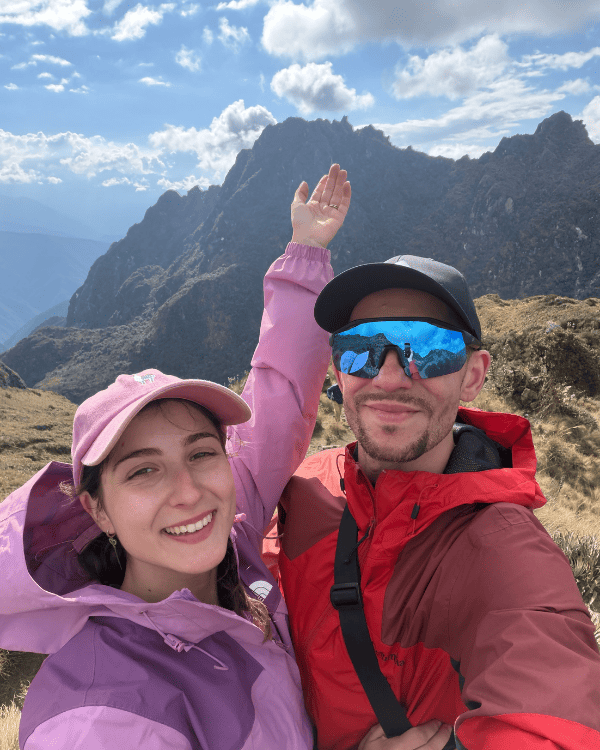
Inca Trail Day 3: An Easier Day, Amazing Ruins
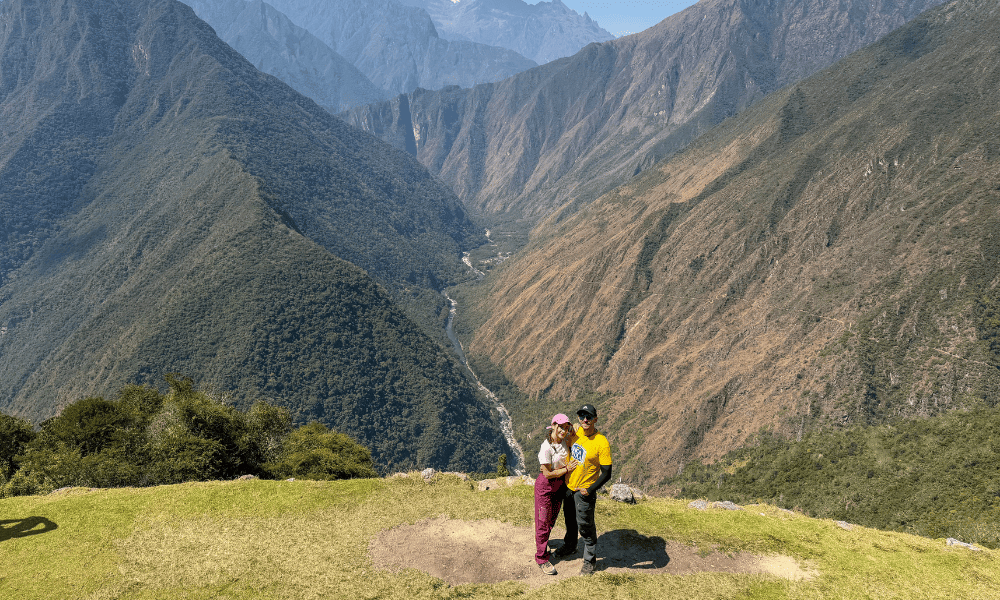
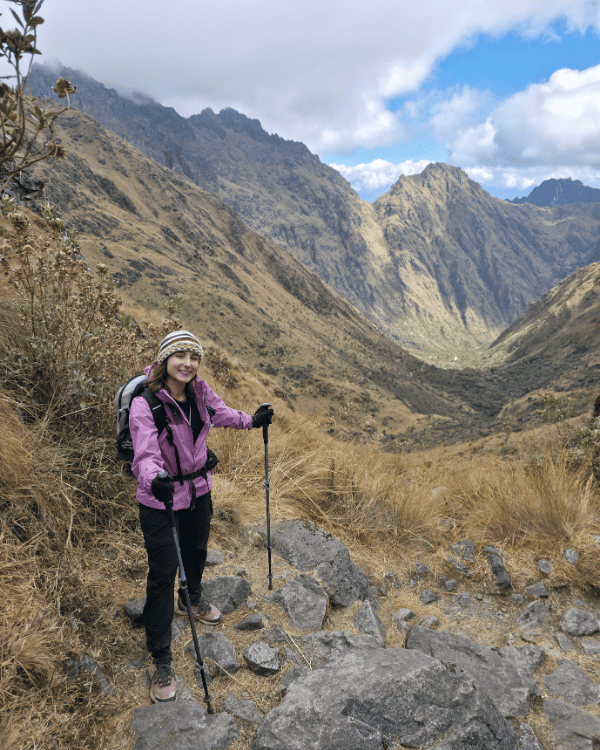
📍 Day 3: Short and mostly downhill. Careful with your knees and ankles, and use hiking poles. About 10 km, camp at 2,680 m.
Day 3 is the chill one. The views are lovely and the ruins are amazing, with even more of them right next to camp.
It’s also when you get your first shower (cold, but if you arrive early it’s still warm outside) and your first bit of phone signal.
The evening was our favourite part of the whole trek. The porters and cooks were introduced one by one, by name and age, in front of everyone. They’re shy but so lovely. We got to know everyone’s names, shook their hands and introduced ourselves too.
Everybody put money in envelopes and we handed them over, and then the chefs brought out a cake they had made for the whole group. It felt so special! They even used it to congratulate a couple on their anniversary, and we shared our slice with the team, because they deserve it more than anyone.
Then go to bed early, because day 4 starts around 3 am.
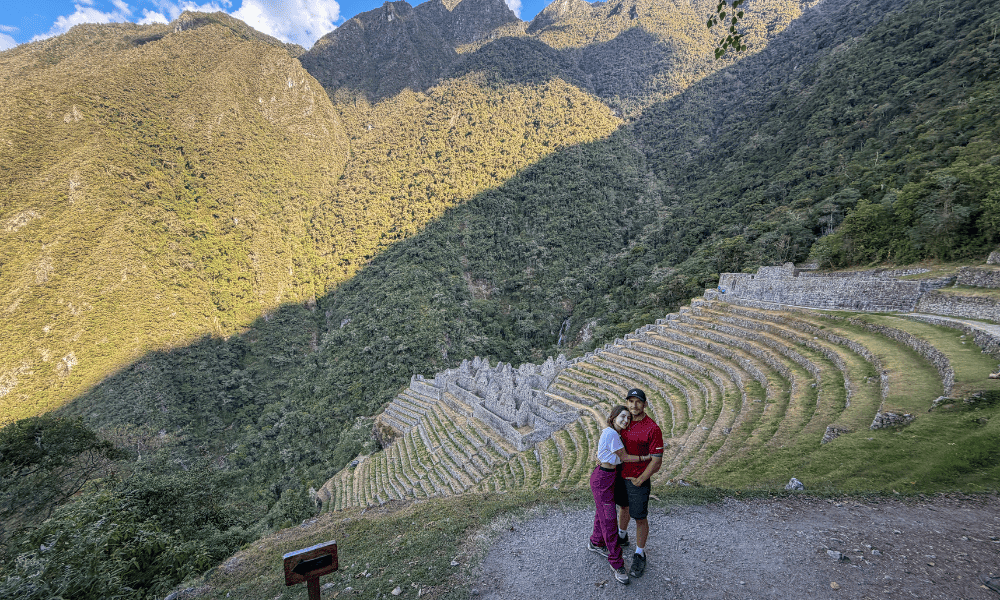
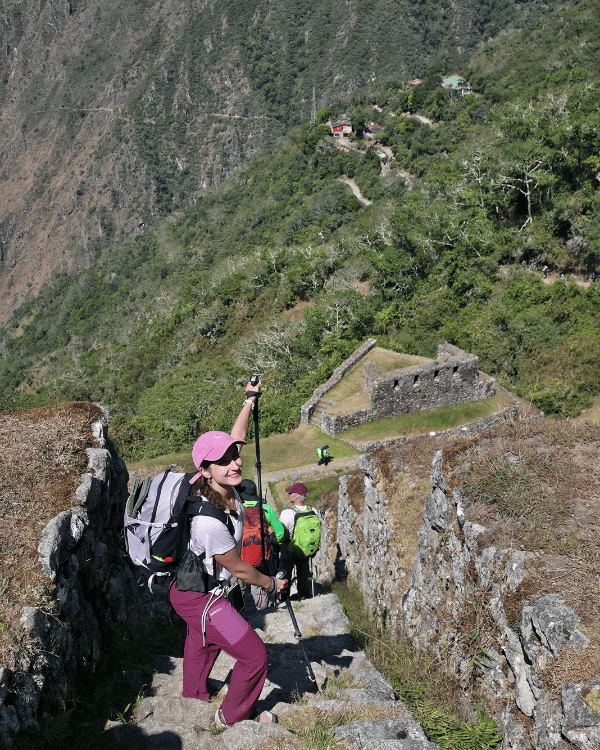
Inca Trail Day 4: Sun Gate and Machu Picchu
📍 Day 4: A very early start. Checkpoint at 5, Sun Gate, then Machu Picchu. About 5 km to Machu Picchu (2,400 m).
We left camp around 3 am and walked for about 15 minutes to reach the checkpoint, which doesn’t open until 5 am. Yes, that means almost two hours of waiting in the freezing cold! The earlier you arrive, the better your spot in the queue, and if you’re lucky, you might even get one of the few benches (there are only about five). Bring all your warm layers, you’ll definitely need them!
It might sound a bit crazy, but it’s worth it if you want to be among the first to reach the Sun Gate.
Breakfast was packed to go, so we carried it in our backpacks. Once the checkpoint opened, we hiked for another 1–2 hours in the dark, so a headlamp is essential.
And then come the famous “gringo killer” steps! They’re steep, but honestly, nothing too scary if you take your time.
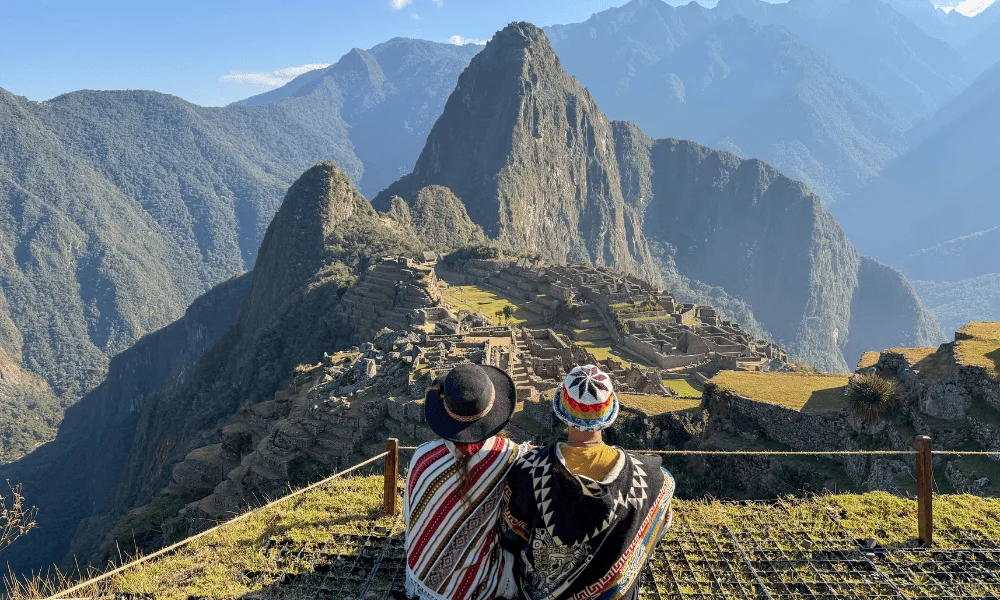
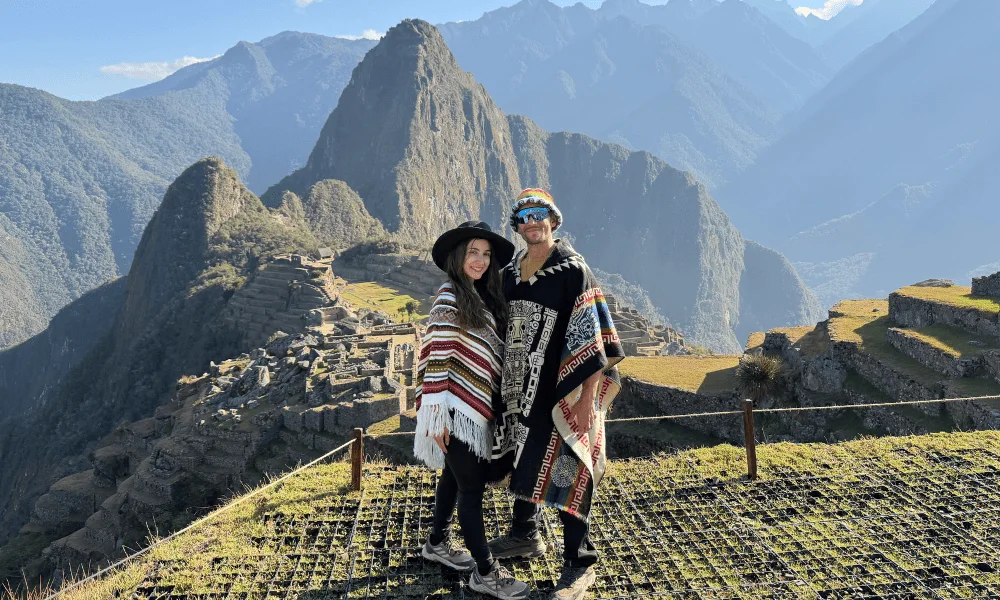
And then, finally, Machu Picchu! After four days of hiking, seeing it from the Sun Gate was such a special moment. It was a little foggy at first, but as the clouds slowly cleared, we got our first proper view of the ruins. Suddenly, those early mornings and all that climbing felt completely worth it!
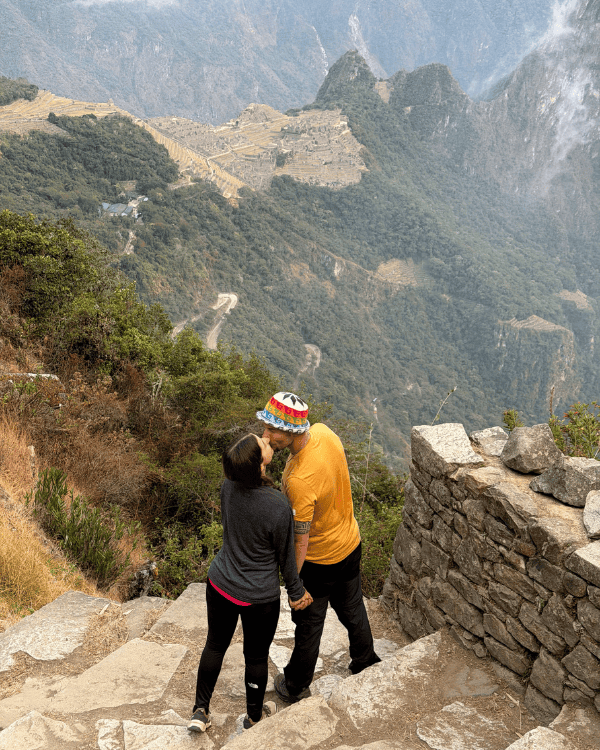
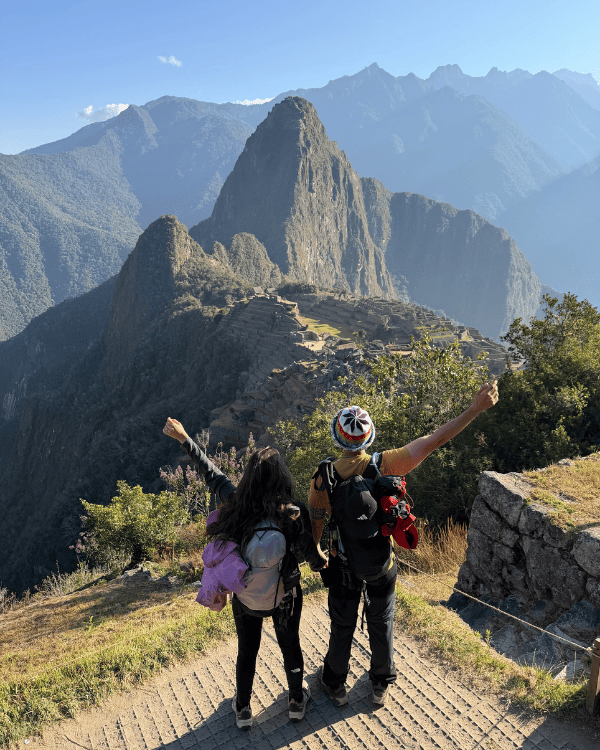
Seeing Machu Picchu from above also gave us that extra motivation to finish the last stretch of the hike and finally reach it. We couldn’t have asked for better weather to end our trek.
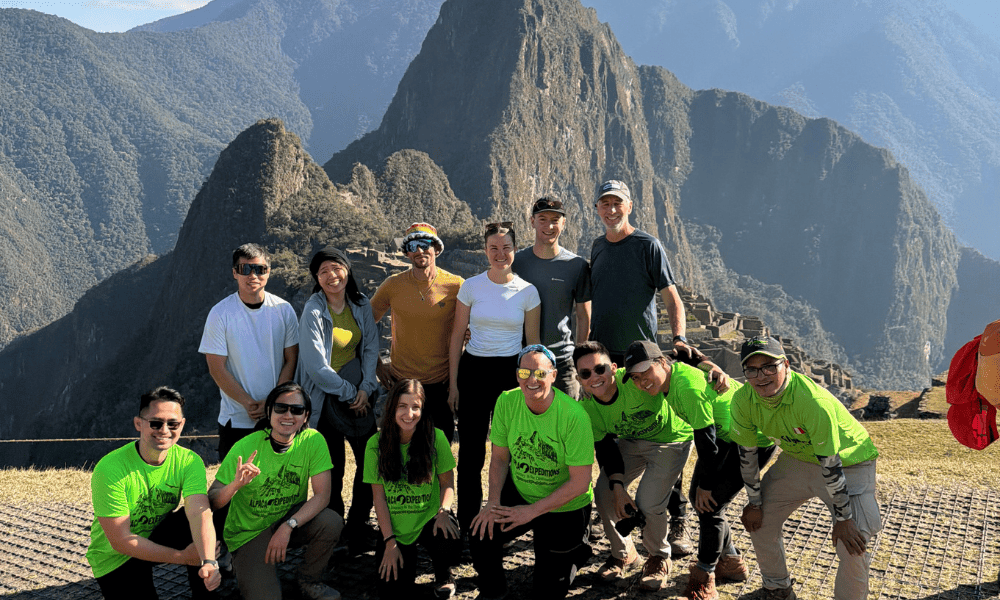
There’s no need to rush through the Sun Gate either. Our whole group gathered there, and everyone had plenty of time to enjoy the view and take photos.
Once we reached Machu Picchu itself, we explored circuits 1 and 3 with our guide and learned more about its fascinating history. There are also toilets at the entrance, and you can leave your backpacks there for a small fee.
One thing we found quite funny was watching all the visitors arriving by bus, looking fresh and ready to explore, while we’d just spent four days hiking through the Andes to get there. Definitely a different way to experience Machu Picchu!
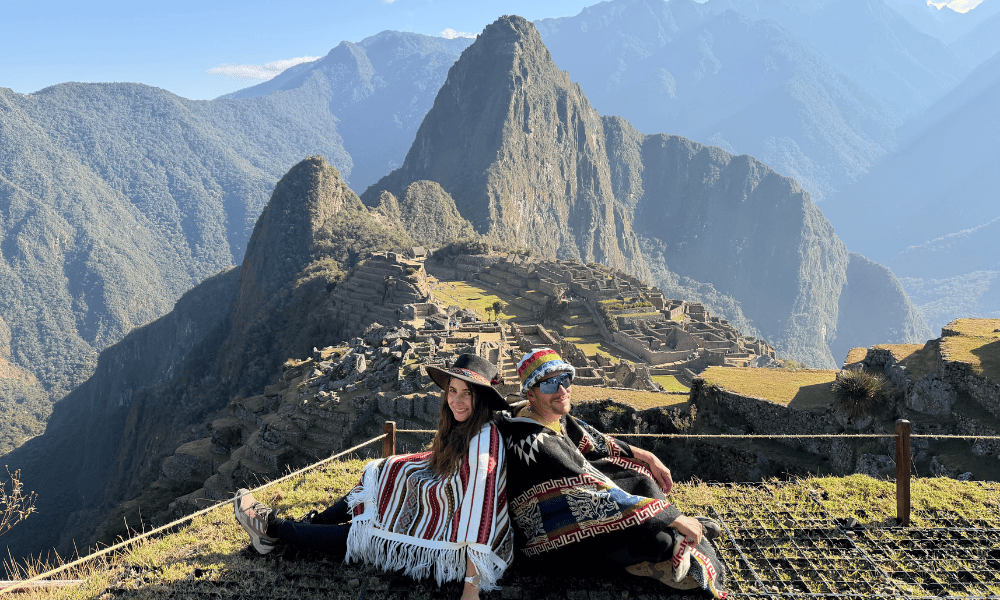
We decided to skip Huayna Picchu, and honestly, we didn’t regret it. A few people from our group did it and later wished they’d skipped it too. After four days of hiking and so many amazing views, we felt we’d seen enough. Plus, our legs deserved a break!
Oh, and at the end of the trek, everyone gets a certificate for completing the Inca Trail and a green T-shirt with the route printed on the back. A nice little souvenir!
Getting Back from Machu Picchu
Alpaca Expeditions organised everything for the return journey:
- We took the bus to Aguas Calientes, where we had lunch together at their reserved area with comfy couches. Much needed after four days of hiking!
- We collected our duffels and took the train to Ollantaytambo.
- From there, a bus was waiting with everyone’s suitcases to take the group back to Cusco, around 4–5 hours in total from Aguas Calientes.
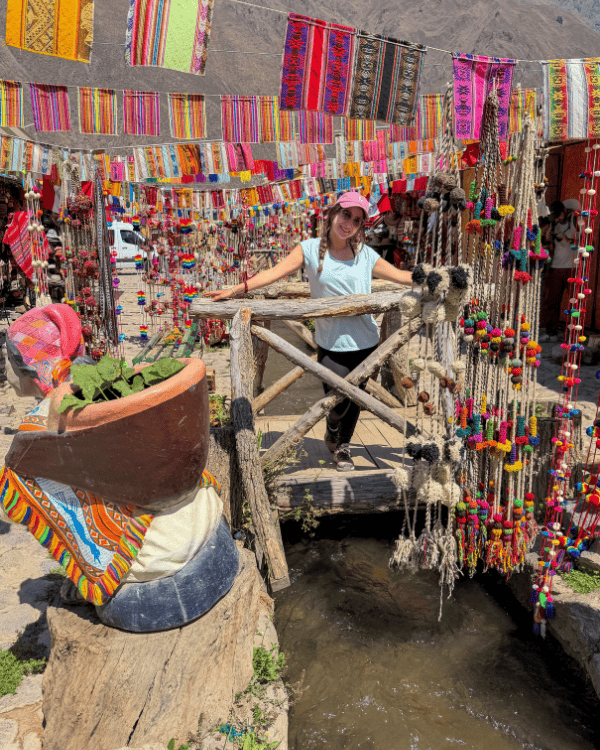
We decided to stay in Ollantaytambo instead, saving ourselves another 2–3 hours of travelling that day. And we’re so glad we did, because it ended up being our favourite town in Peru! We loved exploring its market, where we even found our bronze bells. You can read more in our 3-week Peru itinerary and What to Buy in Peru guide.
🏨 Where we stayed in Ollantaytambo: Picaflor Tambo Guest House (map). It was super close to everything and very charming, and it had everything we could wish for after the Inca Trail, including hot water.
How Much to Tip on the Inca Trail
Alpaca Expeditions recommended these amounts for the porters and cooks, and our group of about 16 pooled them.
| Porters (we had 22) | 150–160 soles per person |
|---|---|
| Cooks (we had 2) | 50–60 soles per person, for both cooks together |
| Total for porters and cooks | About 200–220 soles per person |
| Main guide | About 100 soles, from the two of us together |
| Second guide | About 80 soles, from the two of us together |
We handed over the porters’ and cooks’ envelopes on day 3, and the guides got theirs after the whole trek. They carry the responsibility for everyone and are with you the entire time.
💡 Bring enough small notes in soles before you leave Cusco. And ask your agency what it recommends for your trek.
Is Alpaca Expeditions Worth It? Our Honest Verdict
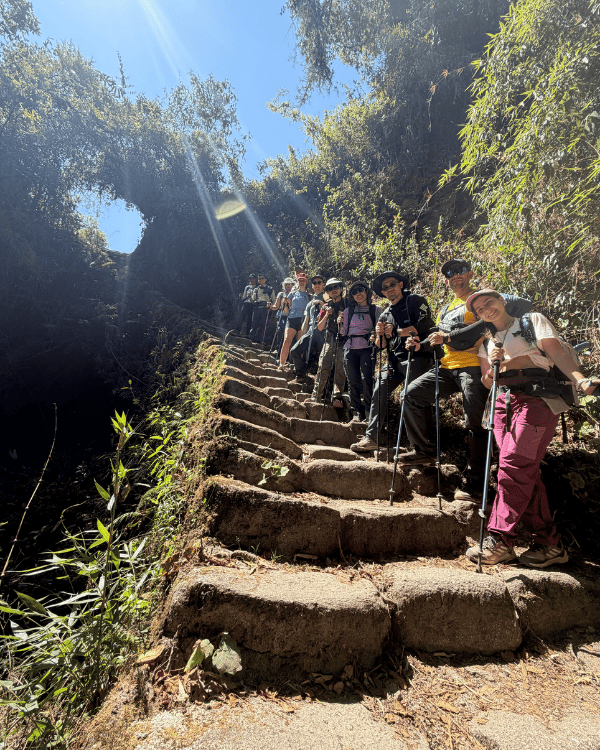
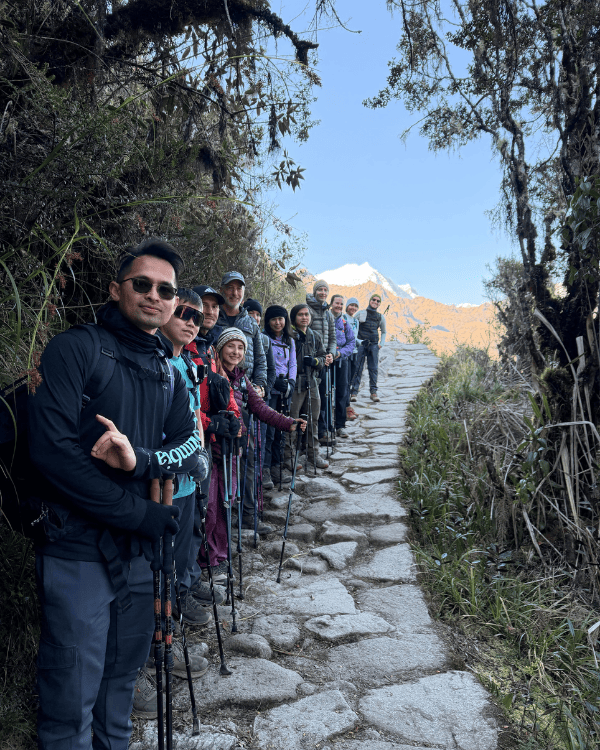
For us, it was absolutely worth the price. We prefer comfort over saving money on a once-in-a-lifetime experience like this, and the food, the guides, the camp setup and the way the team looked after us made the difference.
We were also really impressed by the porters, who work incredibly hard behind the scenes. The group size was perfect for us too: with around 16 hikers, there were always people to talk to and take breaks with. You can check the current itinerary, prices and availability on the Alpaca Expeditions website.
If you’re still comparing agencies, our guide on how to choose an Inca Trail agency will help.
What we loved
- The food, and having our own toilet.
- The guides, who checked our oxygen and had something ready if anyone felt off.
- How well they look after their porters and guests. Any hiking gear you don’t need anymore, you can give to them, and they pass it on to the guides and porters.
- The little touches: a certificate, a green T-shirt with the route on the back, and a cake on our last evening.
- How quickly they answered all our questions before we booked.
- The group size: around 16 hikers, so there was always someone to talk to.
- We were also told that if the trail ever closes, they immediately offer alternative trails.
What to know before you go
- The 7 kg duffel limit is strict.
- Day 1 is dusty and crowded.
- The showers are cold.
- The 3 am start on day 4 is freezing.
- Paying by card added about 5% in August 2026.
- The trains to Machu Picchu aren’t always reliable. While we were in the area, a wildfire and rockslide stopped the trains for about two days (around 4–5 August 2026), and a lot of people couldn’t reach Machu Picchu. If you hike in, you’re much less likely to miss it.
So, would we book Alpaca Expeditions again? Yes. Go slowly on day 2, carry coins, soles and a headlamp, and save some energy for the Sun Gate. Every dusty, freezing step was worth it.
FAQ: Inca Trail with Alpaca Expeditions
How much does the Inca Trail with Alpaca Expeditions cost?
We paid $912 per person in August 2026, with rentals (poles, sleeping bag, air mattress) included. That’s about $835 without the rentals. The card fee (about 5%) and tips were extra. We booked 8 months ahead.
How much should you tip on the Inca Trail?
Our group tipped about 200–220 soles per person for the porters and cooks (150–160 for the 22 porters, 50–60 for the 2 cooks), as recommended by Alpaca Expeditions. We also tipped our two guides about 100 and 80 soles from the two of us together. Ask your agency for its current advice.
How heavy can your duffel bag be?
At Alpaca Expeditions it’s 7 kg per person, including your sleeping gear. They weigh it at the start. Our packing list shows what to take.
Which day of the Inca Trail is the hardest?
Day 2, by far, with two climbs including Dead Woman’s Pass. Day 1 is long but not very hard, day 3 is short and mostly downhill, and day 4 is an early start to Machu Picchu.
Can you hike at your own pace on the Inca Trail?
Yes. Two guides walk with the group: one always at the front and one always at the back with the last hikers. You can hike at your own tempo, with just a few stops where everyone waits and gets a briefing together.
How far ahead should you book the Inca Trail?
We booked 8 months ahead for early August. Permits are limited, so see our guide to choosing an agency for timing.
Planning the Rest of Your Peru Trip?
- How to choose an Inca Trail agency: the questions to ask before you book
- Inca Trail packing list: exactly what to bring
- 3-week Peru itinerary: how the whole trip fits together
- Best things to do in Cusco: our full Cusco guide
- Best restaurants in Cusco: where to celebrate afterwards
- Peru travel guide: all our Peru posts in one place
Written by Ru & Tiago
We hiked the Classic Inca Trail in August 2026 as part of a three-week trip across Peru. We’re two active travellers based in Geneva, and we love sharing the little details we wish we’d known before our trips.