
Plan Your Trip
We love planning trips almost as much as travelling. Finding the perfect little hotel, working out the route, saving the restaurants we absolutely have to try. Until there are 25 tabs open and nobody knows how we’re getting from the airport to the hotel.
This page is our planning system in one place: the free trip planner we built, the order we plan things in, and the websites we actually use to book.
Some links on this page are affiliate links. If you book through them, we may earn a small commission at no extra cost to you.
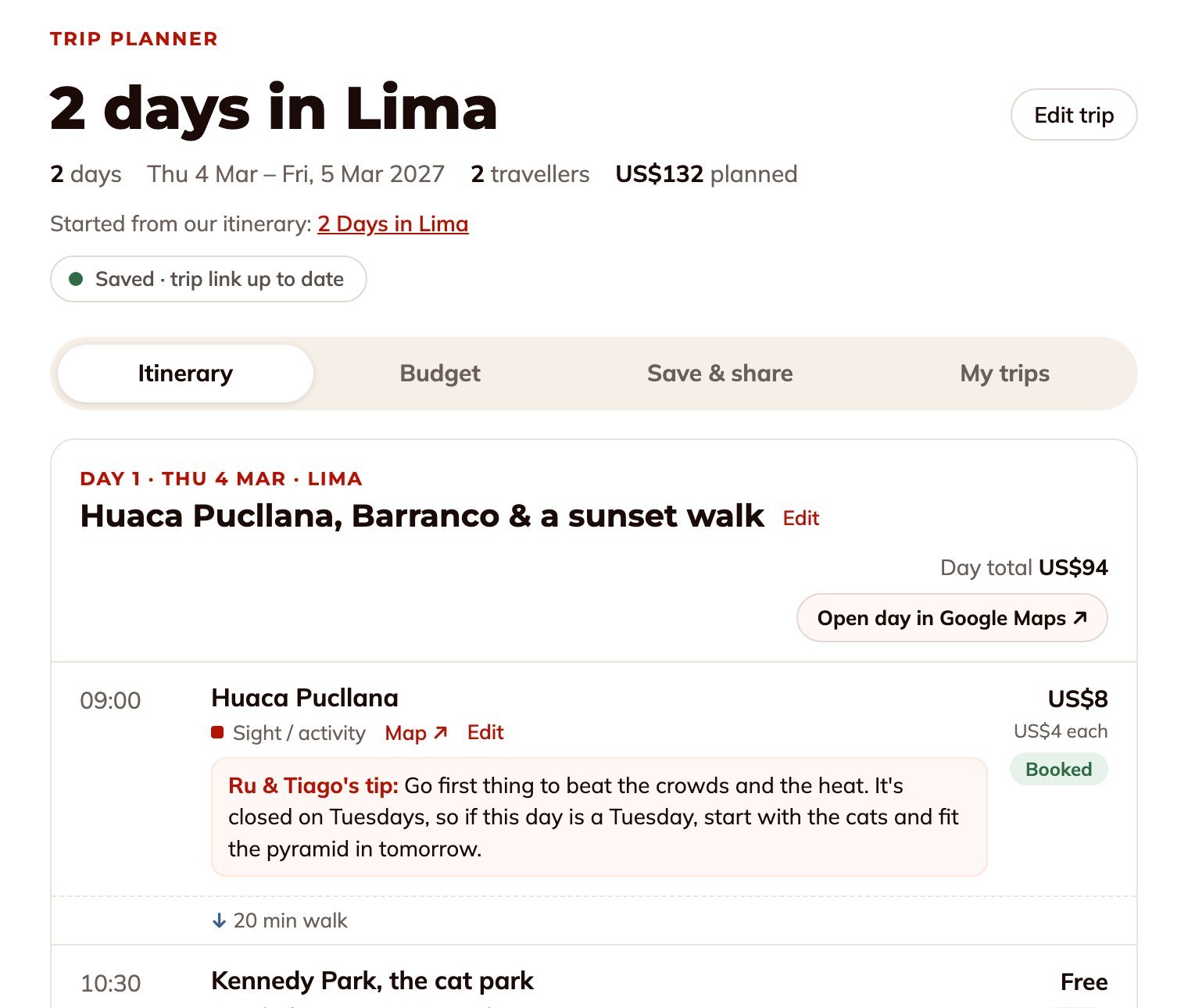
Our free trip planner
Before a big trip, we like having everything in one place. For our three weeks in Peru, that was one huge spreadsheet: daily plans, hotel check-ins, flights, airport pickups. It worked, but it was a pain on a phone.
So we built the friendlier version and made it free. Start from a blank trip, or from one of our own itineraries, with our routes, walking times and tips already in.
- Every day of the trip with times, places, notes and a map link for every stop
- Where you’re sleeping, with check-in times and a reminder for nights you haven’t booked
- A budget that adds itself up: total, per person, and what’s still to pay
- One private link to open it on your phone and laptop, or plan it together
How we plan a trip (without losing our minds)
Everyone has their own way. This is roughly the order we follow, and what we’ve learned the hard way.
Pick where, and how long
Check the season, the distances and anything that sells out. A route that looks easy on a map isn’t always easy in real life: three cities in five days mostly means packing and checking out.
Set a realistic budget
Flights, stays, transport between places, activities, food and getting around. Then the sneaky extras: airport transfers, baggage fees, tourist taxes and the odd taxi. The trip planner adds it up as you go.
Compare flights
Try different dates and nearby airports. Kiwi shows unusual connections. Before you book, check the price with luggage, the layovers and whether it’s all one ticket, and compare with the airline’s own site.
Choose where you sleep
Location matters more than stars. We don’t drive, so we stay within walking distance or close to good public transport. On Booking.com we look at location, recent reviews, the total price and the cancellation rules. Want something special? Try our Unique Stays finder.
Work out how to get around
Trains and buses first: Omio compares connections, especially in Europe. And sort out your airport transfer before you land. We arrived in Tromsø after midnight, the buses had stopped, and the taxi queue was outside in the Arctic cold.
Book what can sell out
Some things are better with a guide or hard to reach without one. GetYourGuide is where we compare tours and tickets. Read recent reviews and check what’s included. And don’t plan every hour: our best moments often weren’t on the plan.
Our favourite travel planning websites
A quick reference for each part of the trip. Always compare with the provider’s own website before you pay.
Our free trip planner
Days, stays, costs and maps in one place. Free, no account.
Booking.com
Compare hotels and apartments by location, reviews and total price.
Unique Stays finder
Bamboo houses, glass domes and other stays that are a trip in themselves.
GetYourGuide
Guided tours, day trips and skip-the-line tickets, with reviews.
Omio
Train, bus and ferry connections in one search, especially in Europe.
Discover Cars
Compare rental companies. Check the insurance excess and deposit before you book.
Airalo eSIM
Data as soon as you land, for maps and transport. Check your phone supports eSIMs.
Start with our real itineraries
The routes we actually travelled, with realistic timings, the places we loved and what we’d do differently. Fair warning: we easily walk 20,000 steps a day. Most of them are also in the trip planner, ready to change.



Our before-you-go checklist
Once the exciting bookings are done, there’s always a bit of admin left. This is what we check before we leave.
- Passport validity and the official visa or entry rules
- Travel insurance, including any activities you’ve booked
- Flight and hotel confirmations
- Your airport transfer and the route to your first hotel
- Mobile data or an eSIM
- Offline maps and important addresses
- Bank cards, payment options and some emergency cash
- The weather forecast, and what that means for packing
- Tickets and tours that need booking ahead
Tip: put the confirmations, check-in times and addresses into your trip plan, so you’re not digging through emails at the airport.
Frequently asked questions
What is the best way to plan a trip?
Choose your destination, dates and a rough budget. Then plan a realistic route, compare transport and places to stay, and book anything that can sell out. Keeping the itinerary, bookings and costs in one place, like our free trip planner, makes everything easier.
What are the best websites for planning a trip?
It depends on what you’re booking. Kiwi helps with flights, Booking.com with places to stay, Omio with trains and buses, and GetYourGuide with tours and tickets. Compare with the provider’s own website before you pay.
Is it cheaper to plan a trip yourself?
Often, especially with flexible dates and some time to compare. But package deals are sometimes better value, so compare the full cost, including transfers and luggage, rather than assuming.
What should a travel itinerary include?
At least your dates, destinations, places to stay, transport, booked activities and the booking details. A budget and space for notes make it even more useful.
How far ahead should I plan a trip?
For a city break, a few weeks is usually enough. For long or popular trips, start a few months ahead: popular tours, small hotels and trains such as the one to Machu Picchu can sell out.
Ready for your next adventure?
We plan a lot, but we never want the plan to take over the trip. Some of our best memories are meals we hadn’t planned and places we found by accident. So organise the important things, leave room for the unexpected, and enjoy it.
Happy travels, Ru & Tiago